
Zen and the Way of Tea: Finding Stillness in Movement
Sit quietly in a tea room, and you might notice something unusual: you’re alert yet calm, focused yet relaxed. Your mind has quieted without you trying to quiet it. You’re aware of each movement—the host’s hands, the sound of water, the warmth of the bowl—yet you’re not analyzing or judging. You’ve entered a meditative state, not through sitting still, but through engaged presence. This is the essence of tea ceremony as Zen practice: meditation in action.
The Historical Bond Between Zen and Tea
The connection between Zen Buddhism and tea ceremony runs deep through Japanese history. Tea itself came to Japan from China in the 9th century, brought by Buddhist monks who drank it to stay awake during long meditation sessions. But it was in the 12th to 16th centuries that tea and Zen became truly intertwined.
Eisai (1141-1215), the monk who established the Rinzai school of Zen in Japan, wrote Kissa Yōjōki (Drinking Tea for Health), proclaiming tea as a divine medicine for both body and mind. He planted tea seeds brought from China at temples, establishing tea cultivation in Japan.
Ikkyū Sōjun (1394-1481), an iconoclastic Zen monk known for his unconventional teaching methods, mentored Murata Jukō (1423-1502), who is considered the father of wabi-cha—the tea ceremony style emphasizing simplicity and spirituality over luxury. Jukō famously said, “When you hear the sound of the wind in the pines in a painting, you’ve entered the realm of tea.”
Sen no Rikyū (1522-1591), the most influential tea master in history, studied Zen under the monk Sōon of Daitokuji temple in Kyoto. Rikyū’s revolutionary simplification of tea ceremony was deeply informed by Zen principles. He stripped away ostentation, embraced imperfection, and transformed tea preparation into a form of spiritual practice accessible to all.
The saying Zen and tea are one flavor (禅茶一味, zen-cha-ichi-mi) captures this unity. Both paths seek the same destination: awakening to the present moment and seeing one’s true nature.
Key Zen Concepts in Tea Ceremony
Several core Zen concepts manifest directly in tea ceremony practice:
Mushin (無心) – “No Mind”
In Zen, mushin means acting without conscious thought or ego—a state where action flows naturally without the interference of self-consciousness or analysis.
In tea ceremony, once you’ve learned the movements, they should flow without thinking: “Now I pick up the scoop, now I transfer the tea, now I whisk.” Instead, there’s just the action itself, performed fully and naturally. Your hands move, the tea is prepared, but there’s no narrator in your head commenting on it.
Beginners are very much “in their heads,” worrying about doing it right. With practice, the movements become mushin—present but not self-conscious.
Ma (間) – “Negative Space”
Ma refers to the space between things—the pause between movements, the silence between words, the emptiness in a composition. In Zen, this space isn’t empty; it’s full of potential and presence.
Tea ceremony is structured around ma:
- The pause after placing the tea bowl
- The silence while whisking
- The moment of stillness before the first sip
- The empty spaces in the tea room’s design
These pauses aren’t awkward silences to fill—they’re essential parts of the experience. In our modern world of constant stimulation, ma teaches the value of spaciousness.
Ichigo Ichie (一期一会) – “One Time, One Meeting”
Though discussed in detail in another article, this concept has deep Zen roots in the teaching of impermanence (mujō). Nothing lasts; nothing repeats. This moment, exactly as it is, will never come again.
This awareness doesn’t create sadness but appreciation. When you truly accept impermanence, each moment becomes precious and deserving of full attention.
Wabi-Sabi (侘寂) – Beauty in Imperfection
Zen doesn’t seek perfection—it recognizes that imperfection, impermanence, and incompleteness are the nature of reality. Trying to make things “perfect” is swimming against the current of existence.
Tea ceremony embraces this: asymmetric tea bowls, weathered bamboo, cracks repaired with gold. Beauty emerges from accepting things as they are, not as we wish them to be.
Kanso (簡素) – Simplicity
Zen practice strips away the unnecessary to reveal the essential. Meditation requires nothing but sitting. Enlightenment isn’t achieved by adding more but by letting go.
Similarly, tea ceremony eliminates excess. A tea room contains only what’s needed. Movements are economical. Decorations are minimal. In this simplicity, every remaining element gains significance.
Fukinsei (不均斉) – Asymmetry
Perfect symmetry suggests human control and artificiality. Nature is asymmetric—trees grow unevenly, mountains have irregular peaks, rivers flow in curves. Zen embraces this natural asymmetry.
Tea rooms avoid perfect balance. Flowers lean naturally. Tea bowls are slightly irregular. This asymmetry feels alive, dynamic, authentic.
Shizen (自然) – Naturalness
In Zen, enlightenment isn’t about becoming something you’re not—it’s about realizing what you already are. There’s no artifice, no pretending, no forcing.
Tea ceremony, despite its formal structure, aims for naturalness. Movements should be graceful but not staged, careful but not stiff. You’re not performing for an audience; you’re simply preparing tea with full attention.

Tea Ceremony as Moving Meditation
Most people associate meditation with sitting still, eyes closed, trying to empty the mind. But Zen encompasses many forms of meditation, including kinhin (walking meditation) and work meditation. Tea ceremony represents meditation through deliberate, mindful action.
How tea ceremony creates meditative states:
Focused Attention: Every movement requires attention. You can’t whisk tea while thinking about your shopping list—the tea will suffer. This forced focus naturally quiets mental chatter.
Repetitive Ritual: Like a mantra in sitting meditation, the repeated actions of tea preparation create a rhythm that settles the mind. The familiarity allows you to drop into deeper presence.
Sensory Engagement: Unlike sitting meditation that turns inward, tea ceremony keeps you engaged with the external world—but with full presence. You notice the texture of bamboo, the sound of water, the scent of incense. This sensory awareness anchors you in the present moment.
Single-Pointed Concentration: Zen emphasizes joriki—the power of focused concentration. Tea ceremony develops this by directing all attention to one task: preparing and serving tea with full presence.
Integration of Body and Mind: You’re not trying to transcend the body or ignore physical sensation—you’re fully embodying each action. The bow comes from your whole being, not just your head. The tea is whisked with your entire attention, not just your hand.
Purposeful Action: Unlike sitting meditation where the purpose is simply sitting, tea ceremony has a clear purpose: creating a meaningful experience for guests. This removes the self-focused goal of “getting enlightened” and redirects attention toward service and connection.
The Role of Silence
Silence in tea ceremony isn’t merely the absence of speech—it’s a positive presence that creates space for deeper connection and awareness.
Types of silence in tea:
Contemplative silence: While appreciating the scroll or flowers in the tokonoma, silence allows each person to form their own connection with the aesthetic presentation.
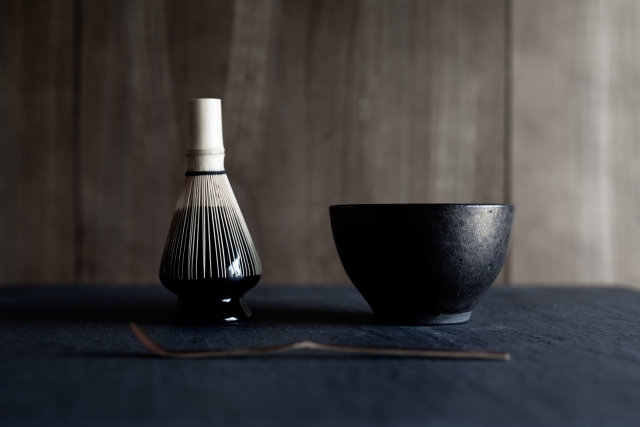
Working silence: The host prepares tea in silence, allowing the sounds of the process—water pouring, whisk stirring, bowl placed on tatami—to become a form of music.
Shared silence: Guests drink together in silence, creating communion that transcends words. This shared quiet presence can feel more intimate than conversation.
Receptive silence: The pause after someone speaks or after an action completes. This space allows the experience to settle and be fully received before moving forward.
In our world of constant noise and chatter, tea ceremony’s silence offers profound relief. Many practitioners find this silence—not empty but full of presence—one of the most powerful aspects of the practice.
What Practitioners Experience Internally
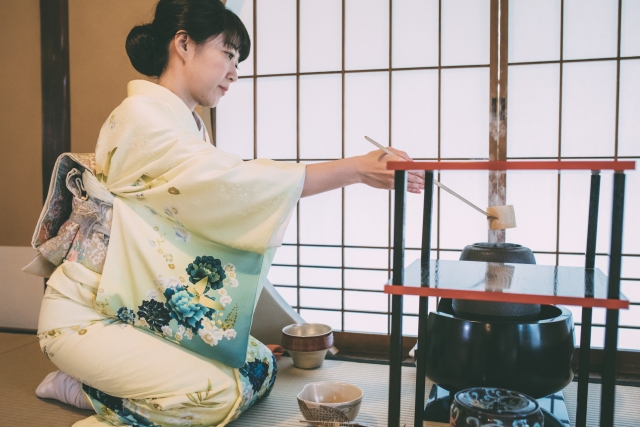
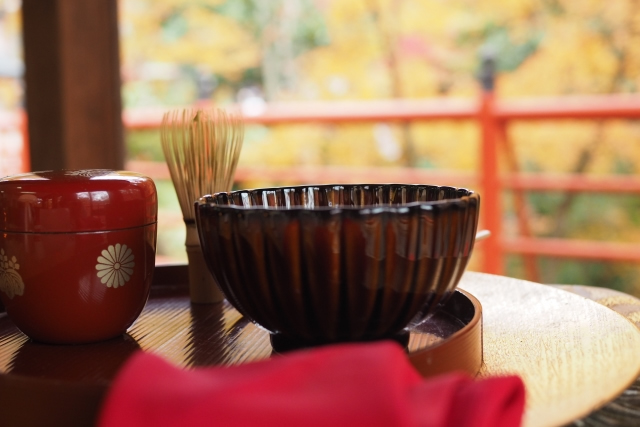
Understanding tea ceremony as Zen practice helps explain what happens internally during a ceremony:
Initially (First Encounters):
- Nervousness about doing it “right”
- Self-consciousness about movements
- Analytical mind categorizing everything
- Awareness of being watched
- Focus on external correctness
With Practice (Developing Practitioners):
- Moments where thinking drops away
- Increasing comfort with silence
- Noticing subtle details previously missed
- Beginning to feel rather than think the ceremony
- Brief experiences of timelessness
Deeper Practice (Experienced Practitioners):
- Extended periods of mushin (no-mind)
- Deep peace without trying to be peaceful
- Connection with others without speaking
- Appreciation of imperfection and transience
- Ceremony as prayer or offering, not performance
- Sense of participating in something larger than oneself
Profound Practice (Masters):
- Complete presence—no separation between self and action
- Each ceremony feels like the first
- Embodied wisdom that transcends technique
- Ability to create transformative space for others
- Understanding that can’t be put into words
These stages aren’t strictly linear—even masters have distracted days, and beginners can have moments of profound presence. But the general trajectory moves from effortful concentration to effortless awareness.
Approaching Tea Ceremony as Meditation
If you’re interested in experiencing tea ceremony as meditation rather than just cultural tourism, here’s how to approach it:
Before the Ceremony:
- Arrive early if possible, allowing transition time
- Let go of your agenda and expectations
- Take a few conscious breaths to settle
- Set an intention to be fully present
- Remember: there’s nothing to achieve, just this experience to receive
During the Ceremony:
- Notice when your mind wanders and gently return attention to the present
- Engage all senses—what do you see, hear, smell, taste, feel?
- Allow silence to be comfortable, not something to fill
- Don’t try to “understand” everything intellectually—let yourself simply experience
- Trust that your body knows how to be present even if your mind doesn’t
- Receive each element as a gift—the bow, the tea, the shared silence
After the Ceremony:
- Resist the urge to immediately check your phone or rush to the next thing
- Take a few moments to sit with the experience
- Notice how you feel—your mental state, energy level, sense of time
- Consider journaling about the experience while it’s fresh
- Carry some of that presence into the rest of your day
Learning the Zen Approach at Tea Ceremony Canon Kyoto
For international visitors seeking to experience tea ceremony as meditation, Tea Ceremony Canon Kyoto offers an accessible entry point that honors the Zen foundations of the practice.
Located just one minute from Fushimi Inari Shrine—itself a sacred site where countless visitors seek spiritual connection—the tea ceremony experience and kimono rental are naturally situated in an environment conducive to contemplation. The shrine, with its thousands of torii gates creating a pathway up the mountain, functions much like a walking meditation. The climb requires physical effort and attention, quieting mental chatter and bringing you into your body and the present moment.
At Canon Kyoto, instructors can explain the meditative aspects of tea ceremony and guide you toward a more contemplative experience rather than merely demonstrating cultural technique. They understand that many foreign visitors come seeking not just to learn about Japanese culture but to find moments of peace and presence in their busy travels.
The hands-on nature of the experience is crucial for accessing the meditative state. Reading about mushin is interesting; actually experiencing your hands moving to prepare tea while your thinking mind quiets—that’s transformation. You’ll discover that meditation doesn’t require sitting perfectly still on a cushion; it can happen while whisking matcha, while bowing, while placing a bowl carefully on tatami.
After your tea ceremony, the walk through Fushimi Inari becomes an extension of practice. Notice how your awareness has shifted. Do you walk more slowly? Notice more details? Feel more present in your body? The thousands of torii gates, originally separate from tea ceremony, create their own meditative journey that complements what you’ve just experienced. Many visitors find that the combination—tea ceremony followed by mindful walking through the shrine—creates a complete meditation experience.
Zen Without Dogma
One beautiful aspect of experiencing Zen through tea ceremony is that it’s non-dogmatic. You don’t need to:
- Become Buddhist
- Believe anything specific
- Reject your own spiritual tradition
- Use religious terminology
- Make a long-term commitment
Tea ceremony simply invites you to be fully present for a short period of time. Whether you interpret that experience through a Buddhist lens, a secular mindfulness lens, or your own spiritual framework, the invitation is the same: be here now, with full attention and open heart.
This makes tea ceremony accessible to anyone, regardless of religious background or philosophical orientation. The practice itself teaches; no belief is required.
Bringing Zen Awareness into Daily Life
The Zen awareness cultivated in tea ceremony can extend beyond the tea room:
Mindful Actions: Approach daily tasks—washing dishes, making coffee, commuting—with the same presence you brought to whisking tea.
Appreciating Impermanence: Notice the changing seasons, the aging of objects, the fleeting nature of each moment. Let this awareness deepen appreciation rather than create sadness.
Finding Ma: Build pauses into your day. Between meetings, after completing a task, before responding to a message—create space for breath and presence.
Embracing Simplicity: Gradually remove what’s unnecessary from your environment, schedule, and mental load. Notice how simplicity creates space for what matters.
Naturalness in Interaction: Be authentically yourself rather than performing who you think you should be. Let interactions flow naturally rather than forcing them.
The goal isn’t to become a Zen master or to maintain perfect mindfulness 24/7. It’s simply to bring more moments of genuine presence into your life, informed by the taste of deep presence you experienced in tea ceremony.
The Gateless Gate
There’s a famous Zen collection called The Gateless Gate (Mumonkan). The title itself is a koan—how do you enter through a gate that doesn’t exist?
Tea ceremony is like this. There’s nothing to achieve, nowhere to arrive, nothing to add to yourself. The door to presence is always open; you’re already standing in it. The ceremony simply reveals what’s always been true: this moment, exactly as it is, is complete.
When you bow to receive the tea bowl, when you feel its warmth in your hands, when you taste the bitter-sweet matcha—you’re not doing these things to get somewhere else. This is it. This is the destination.
Zen master Dōgen said, “To study the Buddha Way is to study the self. To study the self is to forget the self.” In tea ceremony, as you study the movements and forms, you gradually forget yourself—your worries, your self-consciousness, your constant mental commentary. What remains is just this: the sound of water, the taste of tea, the present moment shared with others.
No special state is needed. No mystical experience required. Just tea, prepared with full attention, shared with open heart. That’s enough. That’s everything.
Water boils. Tea is whisked. The bowl passes from hand to hand. In this simple ritual, repeated for centuries, Zen and tea become one flavor. The gate was never closed. The stillness was never separate from the movement. Meditation was never separate from this: preparing tea, drinking tea, cleaning the bowl, and beginning again.
Canon Kyoto Tea Ceremony Booking
Please Select Your Booking Option:
🇺🇸 English Booking Form
If you’re comfortable proceeding in English,
you can complete your reservation using the booking form below.
🌐 Multilingual Booking Page
If you’d prefer to view the booking page in your native language,
please click here to access our Multilingual Booking Form.


