
Tea Room Architecture: Designing Spaces for Transcendence
Step through the small entrance of a traditional tea room, and you’re no longer in ordinary space. Somehow, despite being just a few tatami mats in size, the room feels vast. Despite its simplicity, it feels sacred. This transformation isn’t accidental—every element of tea room architecture is designed to separate you from the everyday world and create an environment for spiritual and aesthetic experience.
The Philosophy Behind Tea Room Design
Tea room architecture emerged in 16th-century Japan as tea ceremony evolved from a pastime of the wealthy to a spiritual practice influenced by Zen Buddhism. The tea master Sen no Rikyū revolutionized tea spaces by rejecting the large, ornate rooms favored by the aristocracy and instead creating small, rustic structures that emphasized humility, simplicity, and intimacy.
The Japanese term for tea room is chashitsu (茶室), and a standalone tea house is called a sukiya (数寄屋), which literally means “abode of vacancy” or “house of refined taste.” This name itself hints at the philosophy: these are spaces defined as much by what’s absent as by what’s present.
The goal is to create a space that feels removed from the world—a temporary refuge where participants can focus entirely on the shared experience of tea ceremony, free from social hierarchies and worldly concerns.
The Nijiri-guchi: Entrance to Another World
Perhaps the most distinctive feature of a traditional tea room is the nijiri-guchi (躙り口), or “crawling entrance.” This small opening, typically only about 60 centimeters square, forces everyone—regardless of social status—to bow low and enter on their knees.
Why so small?
Practical origins: Samurai had to remove their swords before entering. The small entrance made it impossible to bring weapons inside, creating a space of peace and equality.
Symbolic meaning: The act of bowing low humbles every participant. A feudal lord and a merchant both must lower themselves equally to enter. Inside the tea room, all are guests sharing an experience.
Spiritual threshold: Physically bowing and crawling creates a powerful psychological shift. You’re not casually walking into a room—you’re deliberately entering a sacred space. This physical act prepares your mind for the meditative experience ahead.
Modern variation: Many tea houses for tourists have regular-sized doors, but the symbolic meaning remains. You’re still crossing from the ordinary world into a carefully crafted environment designed for presence and mindfulness.
Tea Room Size and Scale: The Power of Small Spaces
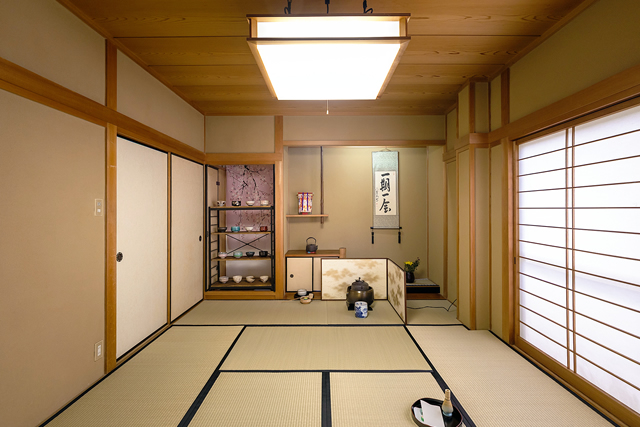
Traditional tea rooms are remarkably small, typically just 4.5 tatami mats (about 2.7 x 2.7 meters or 9 x 9 feet). This size is based on a story about the Vimalakirti Sutra, where a small room miraculously accommodates many Buddhist disciples.
Why so intimate?
Creates connection: In a small space, participants are physically close, fostering a sense of shared experience and equality. There’s nowhere to hide, no way to remain distant.
Focuses attention: The limited space eliminates distractions. Your attention naturally narrows to what’s immediately present: the host’s movements, the scent of incense, the sound of water boiling.
Embodies humility: A small, simple room is the opposite of a grand hall designed to impress. It says, “Here, we value the experience over ostentation.”
Practical warmth: In Japan’s cold winters, a small space is easier to heat with a simple charcoal brazier.
The term ichijo han refers to a one-and-a-half tatami mat tea room—the smallest possible space for two people to share tea. This extreme minimalism represents the ultimate refinement of tea room design.
The Tokonoma: A Space for Contemplation
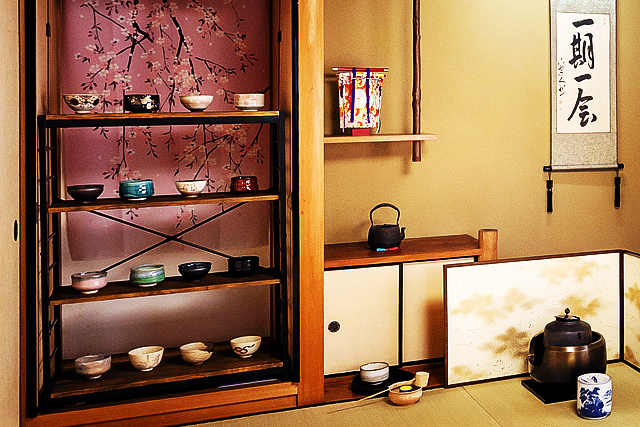
Every tea room has a tokonoma (床の間), a slightly raised alcove that serves as the spiritual and aesthetic focal point of the room. This is where the host displays a hanging scroll (kakemono) and a simple flower arrangement (chabana).
Elements of the tokonoma:
The scroll: Usually features calligraphy or a painting chosen to reflect the season, occasion, or a theme for contemplation. It might be a Zen phrase, a haiku, or a simple image suggesting natural beauty.
The flower: Arranged with deliberate simplicity, often just a single stem or branch, positioned to look as if it’s growing naturally.
The purpose: Guests traditionally bow toward the tokonoma upon entering, acknowledging the spiritual and aesthetic intention of the gathering. Throughout the ceremony, the tokonoma provides a focal point for contemplation—something beautiful to rest your eyes upon during moments of silence.
What’s crucial is that the tokonoma is never cluttered. Often, it feels almost empty, with perhaps just one element catching your attention. This emptiness itself is meaningful, creating space—both physical and mental—for reflection.
Light and Shadow in Tea Room: Creating Atmosphere
Unlike Western architecture that often maximizes natural light, tea room design embraces shadow and dimness. This aesthetic, beautifully described in Junichiro Tanizaki’s essay “In Praise of Shadows,” is essential to the tea room experience.
How light enters:
Shoji screens: Paper-covered sliding doors and windows diffuse sunlight, creating soft, indirect illumination rather than bright glare.
Small windows: Often positioned low and strategically placed to create interesting patterns of light and shadow throughout the day.
Controlled openings: Windows might frame a specific view—a bamboo grove, a stone lantern, a single maple tree—turning the outside world into a living painting.
Why embrace darkness?
In dim light, your other senses heighten. You notice sounds more acutely: water bubbling, the whisk stirring tea, fabric rustling as someone bows. The subdued lighting creates an intimate, contemplative atmosphere, separating the tea room from the bright, busy world outside.
The play of light and shadow also enhances the appreciation of objects. A tea bowl in dim light reveals subtle variations in glaze, depth of color, and texture that harsh lighting would overwhelm.
Natural Materials: Honest Beauty
Tea room construction favors natural, often rustic materials:
Wood: Exposed beams and posts show the natural grain, knots, and character of the tree. Wood isn’t painted or overly finished—it’s allowed to age gracefully, darkening over time.
Clay: Walls are often earth-plastered, with a rough, textured finish rather than smooth perfection. The color comes from natural clays, creating warm, muted tones.
Bamboo: Used for structural elements, accents, and even as window frames. Each bamboo pole is unique, with its own pattern and color.
Tatami: Woven rush mats create the floor surface, soft and slightly yielding underfoot, with a subtle grass fragrance.
Paper: Washi (Japanese paper) covers the shoji screens, strong yet translucent, allowing filtered light while maintaining privacy.
These materials aren’t chosen for luxury or expense but for their natural beauty and the way they age. A tea room isn’t meant to look pristine and new—it’s meant to develop character over time, showing the marks of use and the passage of seasons.
Roji: The Garden Path
Before you even reach the tea room, you encounter the roji (露地), literally “dewy path”—the garden approach leading to the tea house. This isn’t merely a walkway; it’s a transitional space designed to prepare your mind.
Elements of the roji:
Stepping stones: Irregular, natural stones set in moss or gravel, forcing you to walk slowly and watch your step.
Stone lanterns: Weathered and moss-covered, providing subtle light in the evening and aesthetic interest during the day.
Stone water basin (tsukubai): Where guests ritually cleanse their hands and mouth before entering, symbolically purifying themselves.
Strategic plantings: Carefully selected trees, bamboo, and moss create a sense of entering nature, even in the middle of a city.
The journey matters: Walking the roji slows you down. You must pay attention to avoid stumbling on the irregular stones. The act of washing at the basin gives you a moment to pause and transition. By the time you reach the tea room entrance, you’ve physically and mentally left the everyday world behind.
Seasonal Awareness Built Into Tea Room Design
Tea rooms are designed to respond to seasons:
Summer: Shoji screens can be removed, opening the room to cooling breezes. Bamboo blinds provide shade while allowing air circulation.
Winter: Screens remain closed, creating an enclosed, intimate space. The sunken hearth (ro) in the floor provides warmth from charcoal, with tea prepared over its gentle heat.
Spring and Autumn: Subtle adjustments in what’s displayed in the tokonoma and the arrangement of utensils reflect the changing seasons.
This seasonal awareness isn’t just aesthetic—it connects the tea ceremony to the natural world’s rhythms, reminding participants of impermanence and the beauty of each moment.
Experiencing Tea Room Architecture at Tea Ceremony Canon Kyoto
Understanding tea room design intellectually is one thing; experiencing it is another. Tea Ceremony Canon Kyoto, located at the base of sacred Mount Inari, offers visitors the chance to experience tea ceremony in a space that honors these architectural principles.
The location itself is significant. Fushimi Inari Shrine, with its thousands of torii gates winding up the mountain, has been a sacred site for over 1,300 years. The area embodies the connection between architecture, nature, and spirituality that tea room design seeks to create. The shrine’s approach paths, with their stone lanterns, moss-covered rocks, and towering trees, function much like a roji, preparing visitors for a transcendent experience.
At Canon Kyoto, you’ll notice how the tea space incorporates key architectural elements:
- The threshold between outside and inside
- The use of natural light and shadow
- The focal point for contemplation
- The intimate scale that brings participants together
- The sense of being removed from ordinary space
- Authentic Kimono Rental Service to enhance your experience
What’s particularly valuable is having guides who can explain why each element exists and what it means. When you understand that the small entrance isn’t just quaint tradition but a deliberate leveling of social status, or that the dim lighting isn’t just ambiance but a way to heighten your senses, the experience becomes richer.
After your tea ceremony, you’re perfectly positioned to explore how these same principles manifest in Fushimi Inari itself. Notice the transition from the busy street to the shrine approach, the way stone lanterns mark the path, how the torii gates frame and focus your view as you climb. The entire shrine complex is, in a sense, an expanded version of tea room architecture—designed to separate you from the ordinary and prepare you for something meaningful.
The Philosophy of "Just Enough"
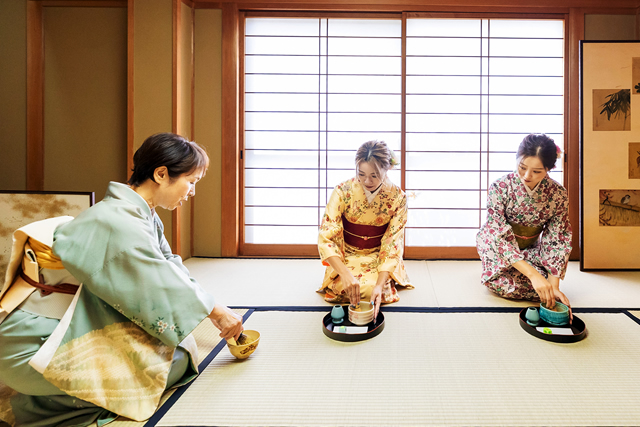
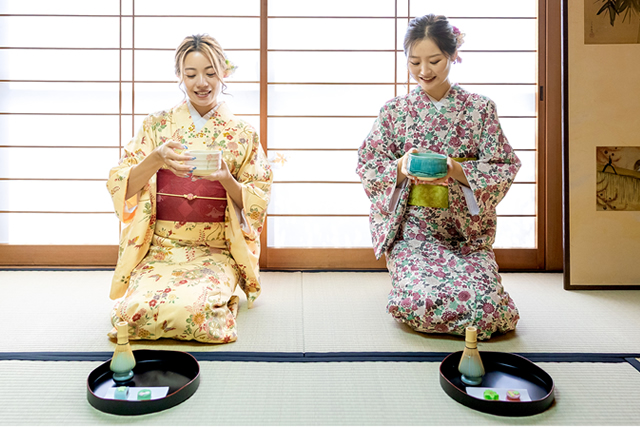
What makes tea room architecture remarkable isn’t what’s included—it’s what’s left out. There’s no decoration for decoration’s sake, no furniture beyond what’s needed, no clutter. Every element serves a purpose, either practical or spiritual.
This isn’t poverty or lack—it’s intentional simplicity that allows space for contemplation. In a world that often equates “more” with “better,” tea room design proposes a radical alternative: “just enough” can be perfect.
The small room waits, intimate and shadow-filled. The narrow entrance humbles all who enter. The single flower speaks of seasons and transience. This isn’t just architecture—it’s philosophy built from wood, clay, and paper, inviting you to step through the threshold into stillness.
Canon Kyoto Tea Ceremony Booking
Please Select Your Booking Option:
🇺🇸 English Booking Form
If you’re comfortable proceeding in English,
you can complete your reservation using the booking form below.
🌐 Multilingual Booking Page
If you’d prefer to view the booking page in your native language,
please click here to access our Multilingual Booking Form.


