Tea Ceremony in the Digital Age: Finding Peace in Modern Times
Tea ceremony offers a different path—one of intentional slowness and mindful presence.
Yet we live in a digital age of constant connectivity. Notifications ping. Emails accumulate. Social media feeds scroll endlessly. We multitask through meetings, meals, and conversations. We optimize for efficiency, speed, and productivity. We’re always on, always available, always consuming information.
And we’re exhausted.
In the midst of this digital whirlwind, an ancient Japanese practice Tea ceremony, that emphasizes slowness, silence, and single-pointed attention is experiencing a quiet renaissance. Tea ceremony, born in 16th-century Japan, is finding new relevance in the 21st century precisely because it offers what modern life lacks: intentional disconnection, meditative focus, and the experience of doing absolutely nothing except being fully present.
This isn’t nostalgia or escapism. It’s recognition that some human needs haven’t changed despite technological transformation—and that ancient practices addressing those needs remain powerfully relevant.
The Modern Crisis Tea Ceremony Addresses


Before exploring how tea ceremony serves contemporary life, let’s acknowledge what many people are experiencing:
Digital Overload: The average person checks their phone 96 times per day—once every ten minutes during waking hours. We’re exposed to more information in a day than our ancestors encountered in a lifetime. Our attention is fractured across multiple screens, apps, and demands.
Attention Depletion: Studies show declining attention spans and increasing difficulty sustaining focus. We skim rather than read deeply, glance rather than observe carefully, listen distractedly rather than attentively. The skills of sustained concentration are atrophying.
Time Scarcity: Despite technology promising to save time, we feel more rushed than ever. We’re always behind, always catching up, always optimizing schedules. The experience of spaciousness has vanished from daily life.
Disconnection Paradox: We’re hyperconnected digitally yet increasingly isolated personally. Video calls and messaging replace face-to-face presence. We curate online personas while feeling unseen in our authentic selves.
Aesthetic Poverty: We’re surrounded by mass-produced objects designed for obsolescence. Beauty is algorithmic—optimized for engagement, filtered for perfection. We’ve lost connection to handmade things, natural materials, and objects that improve with age.
Meaning Crisis: Efficiency-focused culture struggles to answer “why?” We’re productive but not purposeful, busy but not fulfilled, informed but not wise.
Burnout Culture: Rest is seen as weakness. Doing nothing feels like wasting time. We glorify exhaustion and measure worth by productivity. The result: epidemic burnout, anxiety, and depression.
Tea ceremony doesn’t solve these problems—but it offers a temporary refuge and a set of practices that address the underlying needs these modern conditions create.

What Tea Ceremony Offers Digital-Age Humans
Enforced Disconnection:
In a tea ceremony, you put down your phone. There’s no Wi-Fi to check, no emails to answer, no feeds to scroll. For 30 minutes to two hours, you’re genuinely unavailable—and the world doesn’t end.
This forced disconnection reveals something surprising: relief. The constant anxiety of potentially missing something dissipates. You realize that most of what demands your attention isn’t actually urgent. You experience the spaciousness that comes from temporarily opting out of the digital demands.
This isn’t about demonizing technology—it’s about reclaiming choice about when and how you engage with it.
Training Attention:
Tea ceremony is attention training disguised as cultural practice. You must focus on the host’s movements, the placement of the bowl, the proper way to turn it. This isn’t passive consumption—it requires active, sustained concentration.
In an age where our attention is constantly hijacked by algorithmically optimized content designed to be maximally engaging, tea ceremony offers practice in directing attention deliberately. You choose what to focus on and sustain that focus through intentional effort.
This skill—voluntary, sustained attention—is increasingly rare and increasingly valuable. It’s the foundation of deep work, meaningful relationships, and genuine learning.
Embracing Slowness:
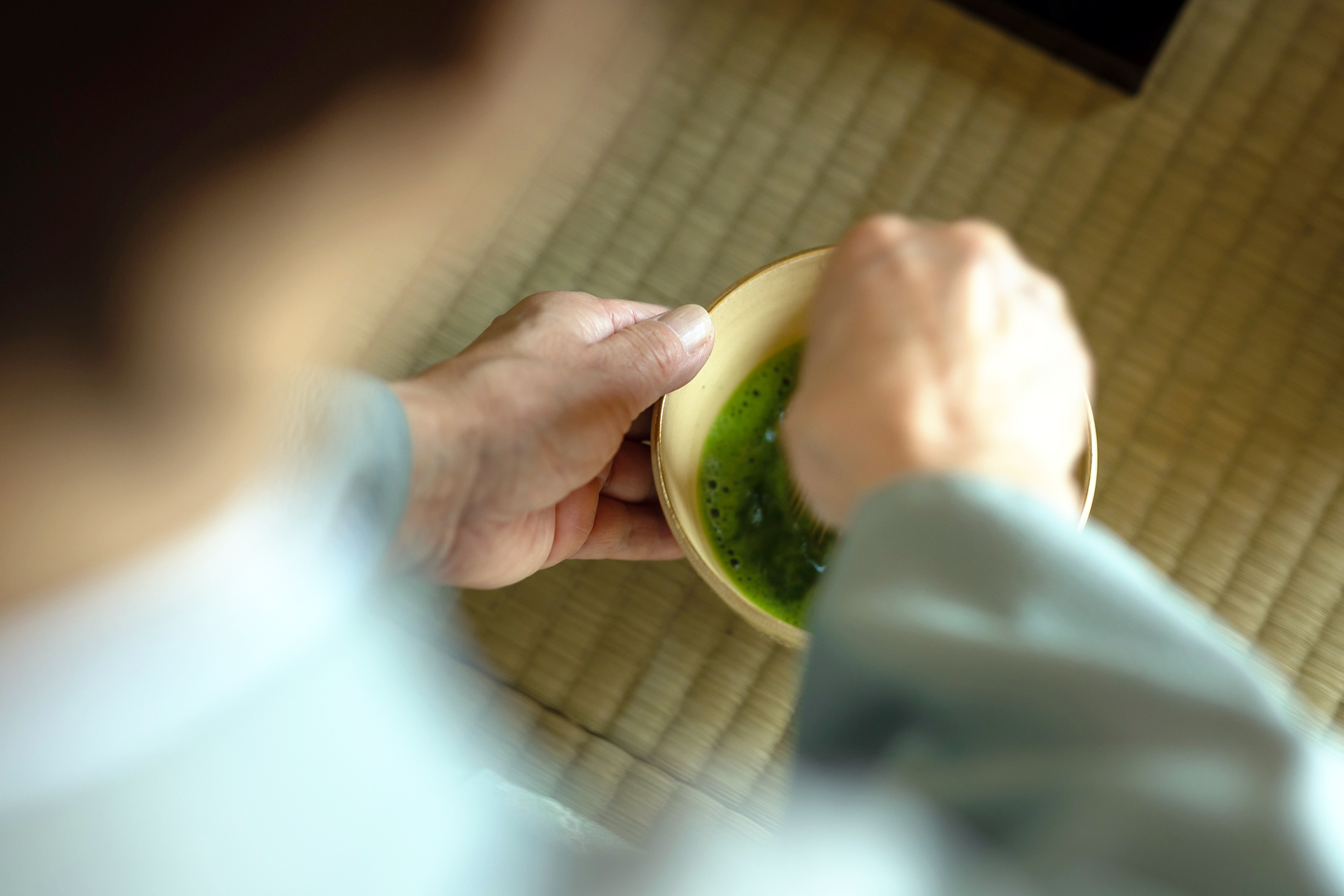
Everything in tea ceremony happens slowly. Water is poured deliberately. The whisk moves in measured rhythm. You bow at a natural pace. Even walking across the tea room uses careful, sliding steps.
This enforced slowness initially frustrates people accustomed to efficiency and speed. But gradually, you realize: slowness isn’t the same as being slow. Moving deliberately allows you to be fully present for each action. Nothing is rushed, yet nothing feels incomplete.
In a world that worships speed, tea ceremony demonstrates that some experiences can’t—and shouldn’t—be accelerated. The value emerges precisely from taking time.
Analog Experience:
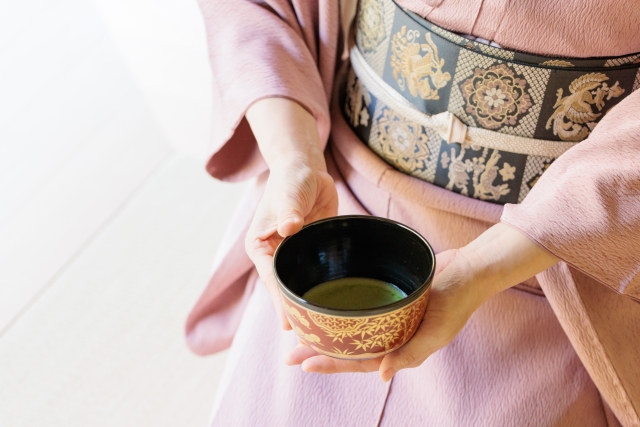
Tea ceremony is profoundly analog. You hold a handmade tea bowl, feel its texture, sense its warmth. You see real light filtering through paper screens. You smell incense and matcha. You taste tea prepared by human hands. You hear water, whisk, fabric, silence.
No screens mediate the experience. No filters enhance it. No algorithm curates it. It’s direct, immediate, and physically embodied. In a digital age, this analog quality feels almost revolutionary.
Presence Over Performance:
Social media encourages performative living—experiencing things primarily to document and share them. Tea ceremony inverts this. While photos might be permitted at certain moments, the emphasis is on being fully present rather than capturing the experience for later consumption or validation.
You’re not there to get the perfect Instagram shot. You’re there to drink tea, notice beauty, and share silence with others. The experience belongs to you and the present moment—not to your followers or your feed.
Appreciation of Imperfection:
Digital life pushes toward perfection—filtered photos, edited videos, curated feeds. Everyone presents their best self, creating impossible standards.
Tea ceremony celebrates wabi-sabi—beauty in imperfection, impermanence, and incompleteness. The tea bowl is asymmetric. The flower arrangement is simple, perhaps showing signs of age. The tea room has visible wear. Nothing is Instagram-perfect, and that’s precisely what makes it beautiful.
This shift in aesthetic values offers psychological relief. You don’t need to be perfect. Imperfection isn’t failure—it’s authentic humanity.
Ritual Structure:
Modern life often lacks ritual. We rush through meals, skip transitions between activities, blur boundaries between work and home. Everything blends together into undifferentiated busyness.
Tea ceremony provides structure—a beginning, middle, and end. Each element has its place and purpose. This ritualized sequence creates containers for experience, marking time as meaningful rather than just elapsed.
People increasingly hunger for ritual in secular contexts. Tea ceremony offers exactly this: a structured practice that creates meaning without requiring religious belief.
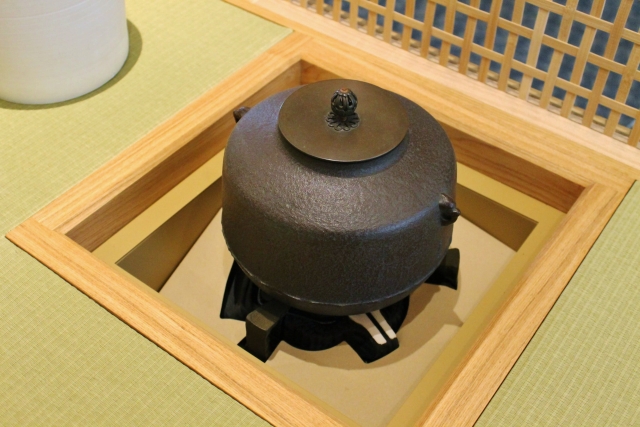
Young People Rediscovering Tea Ceremony
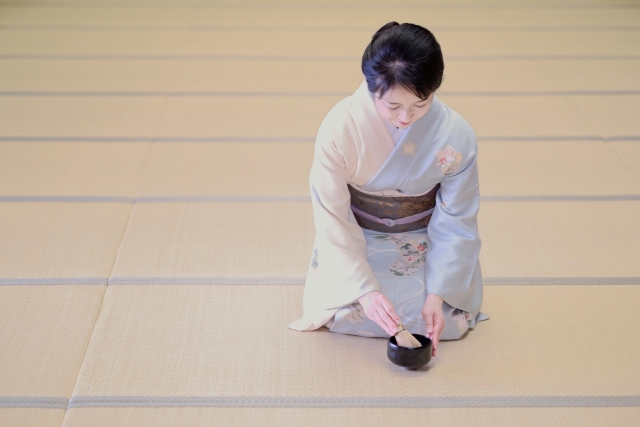
Interestingly, tea ceremony is experiencing renewed interest among younger Japanese—the generation most immersed in digital culture.
Why young people are drawn to tea ceremony:
Many young practitioners share similar motivations and experiences:
Digital Detox: Tech workers and digital natives describe tea ceremony as one of the few times they’re completely away from screens and devices. While the slowness initially frustrates those accustomed to constant stimulation, many report that over time, they begin to crave these unplugged moments.
Mental Health Support: Young people facing anxiety and burnout often discover that tea ceremony provides a practical tool for calming the mind. The structured practice offers a framework for mindfulness that feels more accessible than abstract meditation instructions.
Active Meditation: For those who struggle with seated meditation—finding their minds race when sitting still—tea ceremony’s combination of physical activity and mental focus creates an entry point to meditative states that might otherwise feel unreachable.
Revaluing Slowness: A generation raised with instant gratification and optimized efficiency often finds in tea ceremony a revelation: not everything should be fast, and some experiences are valuable precisely because they require time and cannot be rushed.
Community and Tradition: In an era of digital connection but personal isolation, young practitioners appreciate the tangible community and sense of connection to historical tradition that tea ceremony provides.
This isn’t traditionalism for its own sake—it’s a pragmatic response to modern life’s demands. Young people aren’t rejecting technology; they’re seeking balance and tools for maintaining mental health in a hyperconnected world.
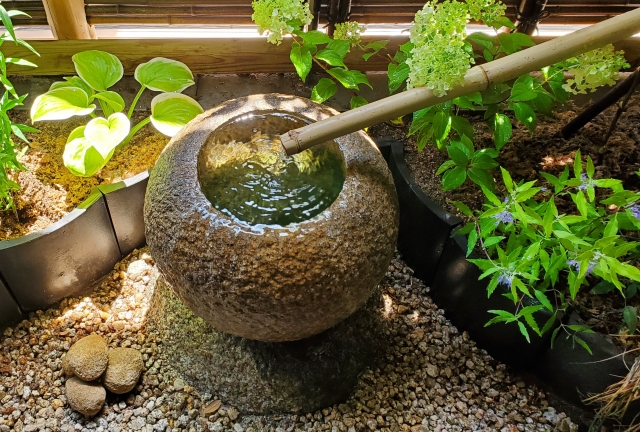
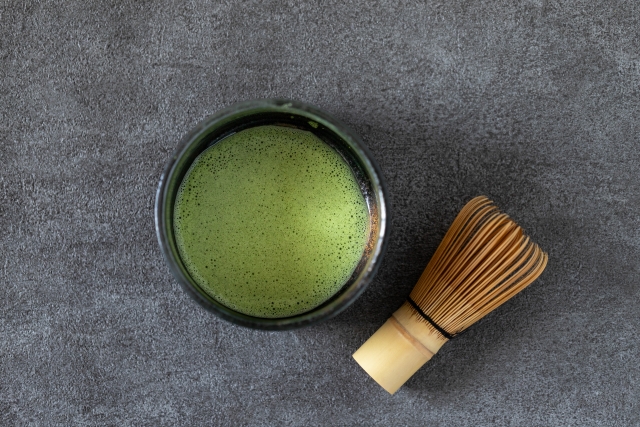
Tea Ceremony Principles for Daily Life
You don’t need to practice tea ceremony formally to benefit from its principles. Here’s how to apply tea ceremony wisdom to modern daily life:
Create Tech-Free Zones:
Designate specific times or spaces where devices don’t enter—meals, first hour after waking, bedroom, one evening per week. Like the tea room creates device-free space, you can create your own.
Practice Single-Tasking:
When washing dishes, just wash dishes. When eating, just eat. When talking with someone, just listen. Give one activity complete attention rather than fragmenting focus across multiple tasks.
Build Intentional Pauses:
Between meetings, after completing a task, before responding to a message—pause. Breathe. Let there be space (ma) rather than rushing from one thing to the next.
Choose Quality Over Quantity:
Rather than surrounding yourself with many cheap, disposable things, invest in fewer objects made with care. Use them until they develop character. This applies to physical objects, experiences, and relationships.
Embrace Imperfection:
Release the pressure to have everything perfect. Share the unfiltered photo. Send the email that’s good enough rather than endlessly perfecting it. Let people see your authentic, imperfect self.
Notice Beauty Daily:
Like appreciating the scroll in the tokonoma, find one thing each day to truly notice and appreciate. A flower, light through leaves, the texture of your coffee cup. Train your eye for everyday beauty.
Ritualize Transitions:
Create small rituals marking transitions—lighting a candle when starting work, a specific tea preparation ending the workday, a few breaths before entering your home. These rituals create psychological boundaries.
Practice Presence:
Whether making coffee, walking to work, or washing your face—do it with full attention. Let mundane activities become opportunities for mindfulness rather than time to zone out or check your phone.

Finding Your Tea Practice at Tea Ceremony Canon Kyoto
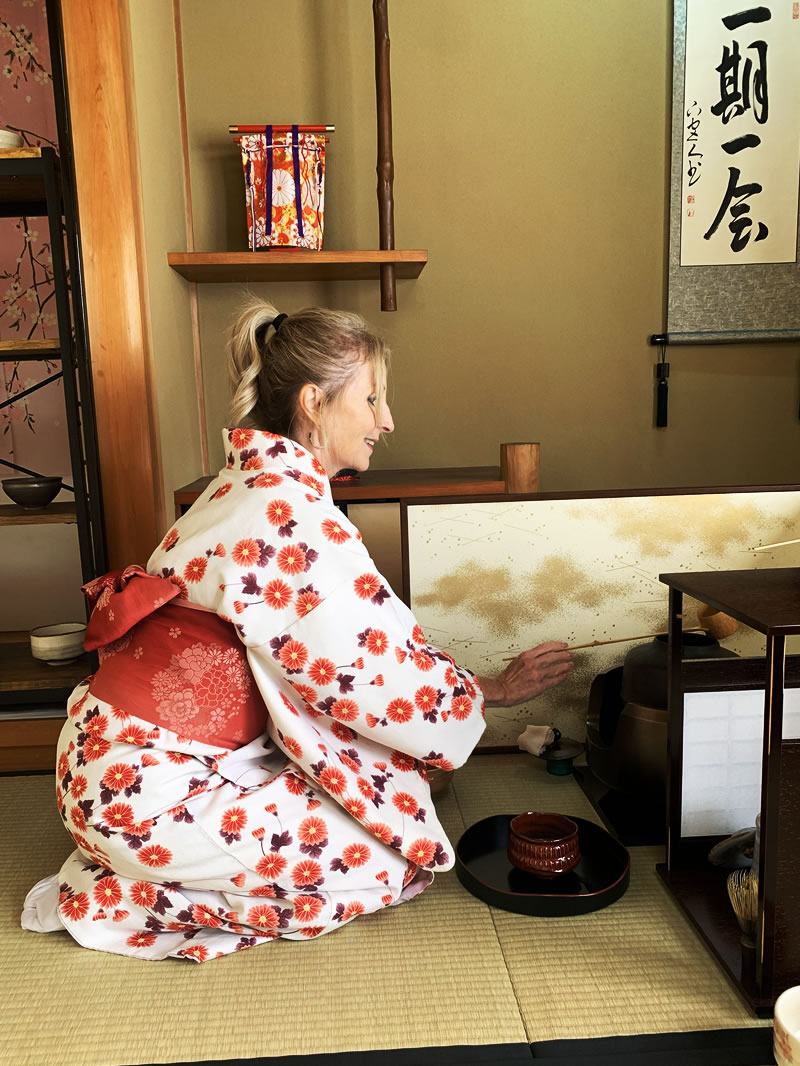
For modern travelers seeking respite from the constant stimulation of sightseeing and digital connection, Tea Ceremony Canon Kyoto offers exactly the pause tea ceremony was designed to provide—but contextualized for contemporary needs.
Located just one minute from Fushimi Inari Shrine, the experience naturally integrates into a day of temple visiting and cultural exploration. But unlike those activities, which can be stimulating and exhausting in their own way, tea ceremony provides genuine rest—not passive rest, but the active rest that comes from complete focus on a simple, meaningful activity.
The instructors understand that many visitors come seeking exactly this: a break from the overstimulation of modern tourism. They create space for silence, for slowness, for being rather than constantly doing. They don’t rush you through a demonstration—they invite you into a genuine experience of tea ceremony as refuge from the noise.
This is particularly valuable given the location. Fushimi Inari, while beautiful, can be crowded and overwhelming with thousands of daily visitors. After navigating crowds and climbing mountain paths through torii gates, settling into the quiet tea room creates powerful contrast. You move from external, active exploration to internal, contemplative presence.
The combination of tea ceremony and the shrine visit creates a complete experience: the active pilgrimage up the mountain, burning energy and engaging with the external world, followed by the quiet internalization of tea ceremony. Together, they offer a perfect balance—activity and stillness, stimulation and peace.
For those feeling burned out by travel itself (a real phenomenon—vacation exhaustion from trying to see and do everything), tea ceremony provides permission to simply be for an hour. You don’t need to be “on,” documenting everything, optimizing your itinerary. You just need to be present for tea.
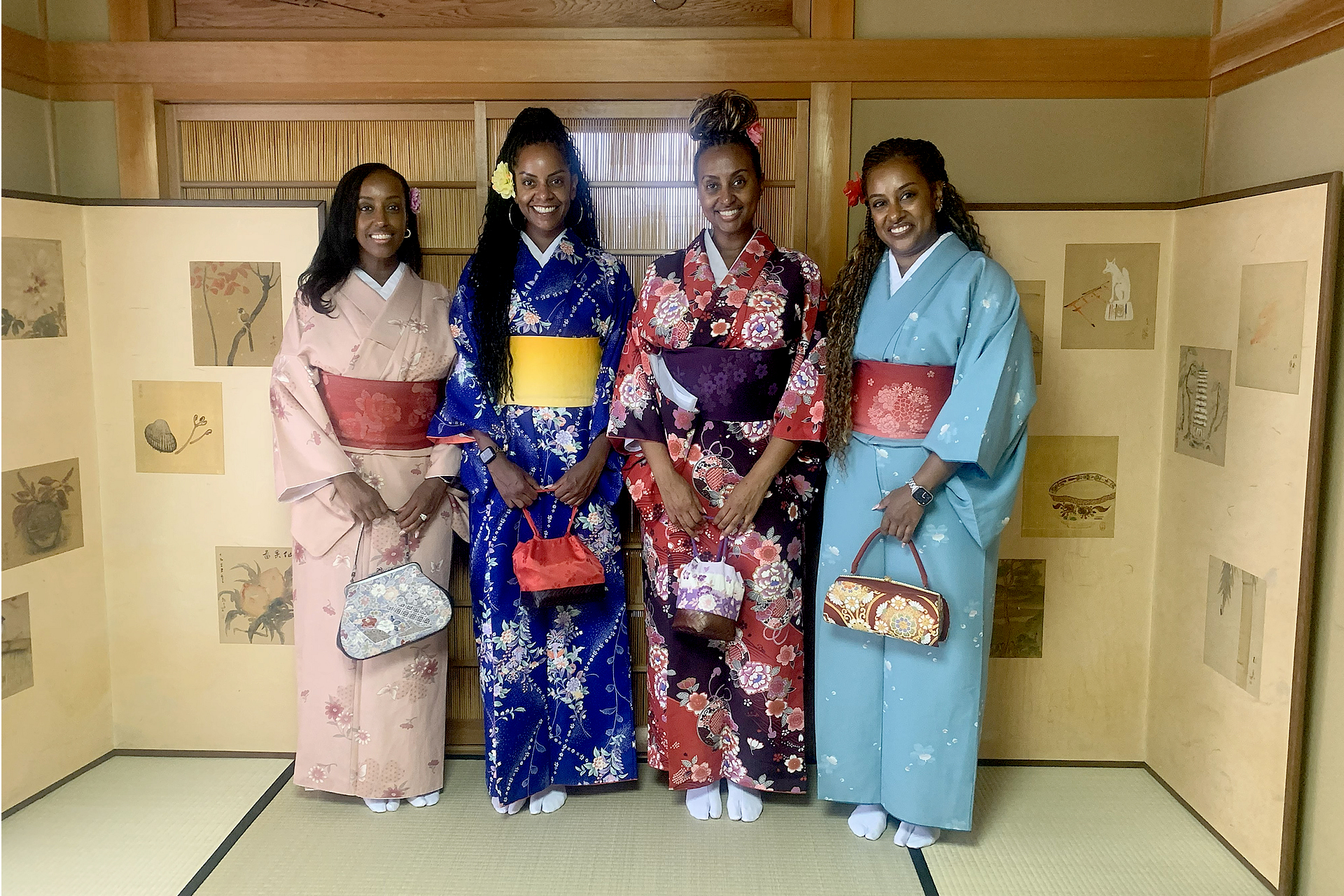
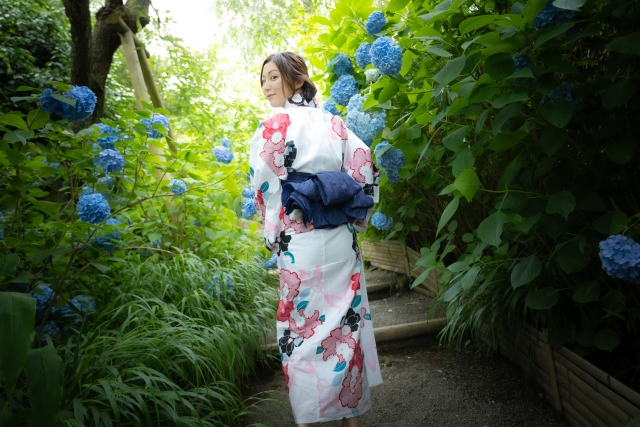
The kimono rental adds another dimension of slowing down. The restrictive garment naturally modifies your movement—you can’t rush in a kimono. This physical constraint becomes a gift, forcing you into the deliberate pace that tea ceremony cultivates. It’s a full-body reminder that not everything needs to be fast.
After your ceremony, you’re equipped to return to Fushimi Inari—or continue your travels—with shifted awareness. You’ve practiced presence, slowness, and attention. The frantic energy of trying to see everything might transform into genuine appreciation of what’s before you. This is tea ceremony’s gift: it changes not just that one hour, but how you move through the hours that follow.
The Counterargument: Isn't This Escapism?
Some might argue that tea ceremony is escapist—a way to temporarily avoid modern life’s realities rather than addressing them. This criticism deserves consideration.
The response:
Tea ceremony isn’t about running from modern life—it’s about building skills and awareness that help you engage with it more effectively. The attention you train in tea ceremony makes you better at focused work. The presence you practice helps you connect more authentically with people. The appreciation for slowness helps you recognize when speed isn’t serving you.
Think of it like physical exercise. Going to the gym for an hour isn’t “avoiding” daily life—it’s building strength and health that support everything else you do. Similarly, tea ceremony isn’t escape but preparation. You temporarily step away to cultivate capacities you bring back into regular life.
Moreover, the critique assumes modern digital culture’s values are correct and anything questioning them is escapism. But what if constant connectivity, relentless productivity, and perpetual stimulation aren’t actually optimal for human flourishing? What if sometimes stepping away isn’t escape but wisdom?
Making It Sustainable
The challenge with any practice is sustainability. A powerful tea ceremony experience in Japan is one thing; maintaining a practice at home is another.
Making tea ceremony sustainable in modern life:
Start Small: You don’t need a full tea ceremony practice. Start with one deliberate tea preparation per week. Just that—mindfully making tea—incorporates key principles.
Adapt Appropriately: If sitting in seiza isn’t sustainable for you, use a chair. If you can’t dedicate an hour, take fifteen minutes. Honor the spirit even if you modify the form.
Connect with Community: Find local tea ceremony groups or practice communities. Shared practice sustains motivation and deepens learning.
Integrate Principles: Even without formal tea practice, bring tea ceremony principles—slowness, attention, appreciation—into daily activities.
Use It When Needed: Tea ceremony practice doesn’t need to be daily. It can be something you return to when feeling overwhelmed, scattered, or disconnected—a tool in your wellbeing toolkit.
Keep Learning: Deepen your understanding through books, videos, or occasional classes. Tea ceremony’s depths can sustain lifelong interest.
Looking Forward: Tea Ceremony's Future
As we move deeper into the digital age, tea ceremony’s relevance will likely increase rather than diminish. The more our lives accelerate and digitize, the more we’ll need practices anchoring us in physical presence, human connection, and embodied experience.
Future developments might include:
Mental Health Integration: Tea ceremony principles incorporated into therapy, mindfulness programs, and wellness initiatives.
Workplace Wellness: Companies creating tea spaces where employees can practice presence and reset attention.
Education: Schools teaching tea ceremony as attention training and cultural education.
Virtual Components: Online instruction and virtual communities complementing (not replacing) in-person practice.
Cross-Cultural Evolution: New forms emerging as tea ceremony continues spreading globally and adapting to different cultural contexts.
Scientific Study: Research measuring tea ceremony’s effects on attention, stress, and wellbeing, building evidence for its benefits.
The practice will continue evolving—as it has for 500 years—while maintaining its core purpose: creating spaces for presence, beauty, and human connection.
The Invitation
This article series began with ichigo ichie—one time, one meeting—and ends with an invitation: Whatever drew you to read about tea ceremony, whether passing curiosity or deep interest, consider it an invitation to explore further.
You might:
- Attend a tea ceremony during travels to Japan
- Find a local teacher in your home city
- Simply incorporate tea ceremony principles into daily life
- Practice mindful tea preparation as personal ritual
- Learn more through books, videos, or online resources
- Share what you’ve learned with others
Tea ceremony doesn’t ask you to become Japanese, adopt Buddhism, or radically change your life. It simply invites you to occasionally step away from the noise, slow down, pay attention, and share beauty with others. In our fast, fragmented, digital age, this invitation feels more relevant than ever.
Final Reflection
We’ve journeyed through twelve articles exploring different facets of tea ceremony: philosophy, technique, aesthetics, history, and contemporary relevance. But ultimately, tea ceremony can’t be fully understood through reading—only through experience.
The tea bowl must be held in your hands. The matcha must be tasted. The silence must be sat with. The movements must be practiced. The principles must be lived.
If these articles inspire you to seek that direct experience—whether in Kyoto, your hometown, or your own kitchen—they’ve served their purpose. Tea ceremony isn’t a museum artifact to admire from a distance. It’s a living practice waiting for you to participate.
In a world that constantly demands more—more productivity, more consumption, more stimulation, more everything—tea ceremony offers something radically different: an invitation to less. Less noise, less rushing, less pretense, less complexity.
And in that less, you might find what modern life most lacks: presence, peace, and the profound satisfaction of doing one simple thing with complete attention.
The water is heating. The matcha is sifted. The bowl waits. This moment—the one you’re in right now—is your invitation to begin.
In the tea room or at your kitchen table, in Kyoto or Copenhagen, in formal ceremony or quiet morning ritual, tea offers the same gift it has for five centuries: a pause, a breath, a space where you can set down the weight of the world and simply be present for this one bowl of tea, this one moment, this one unrepeatable meeting with yourself and others.
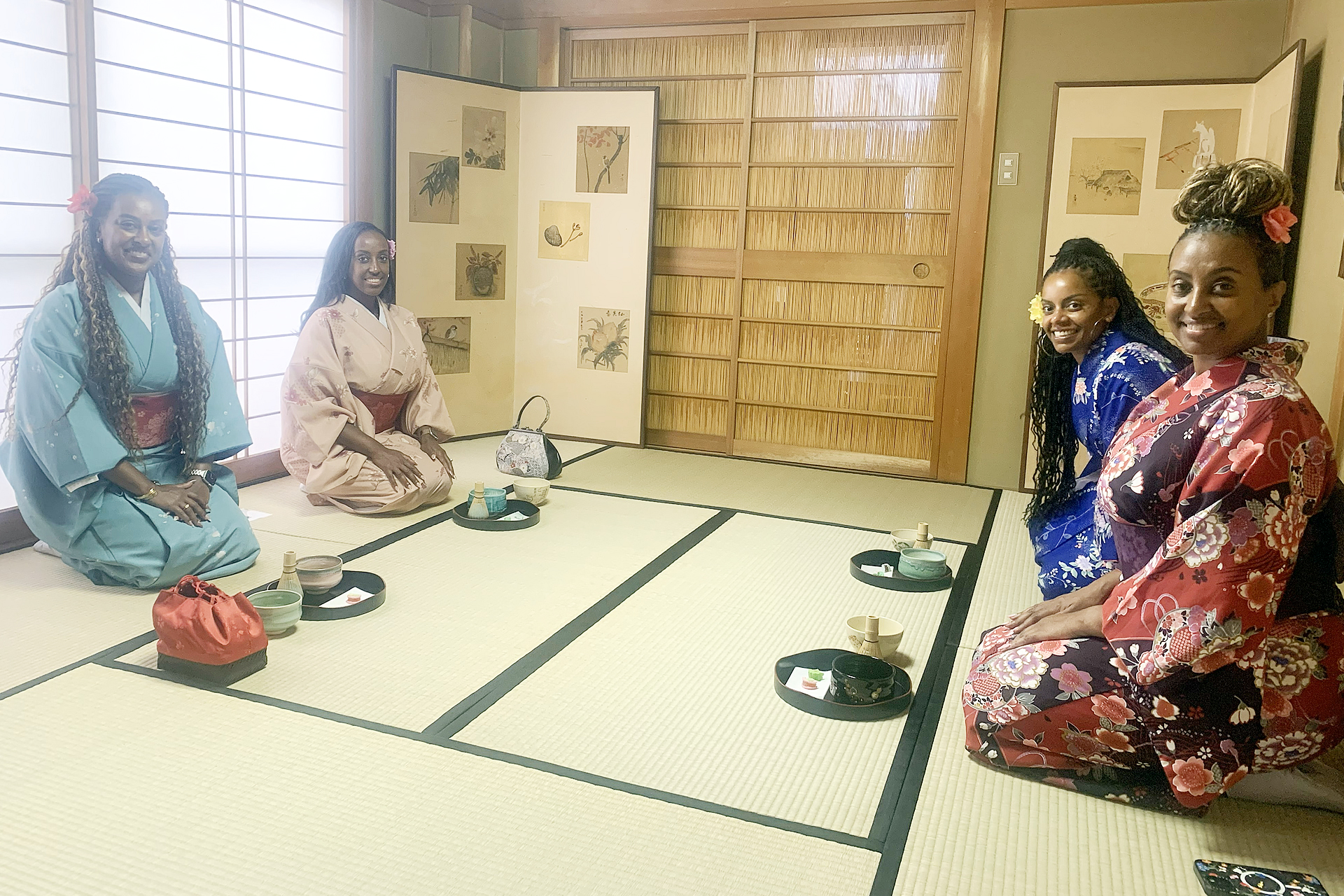
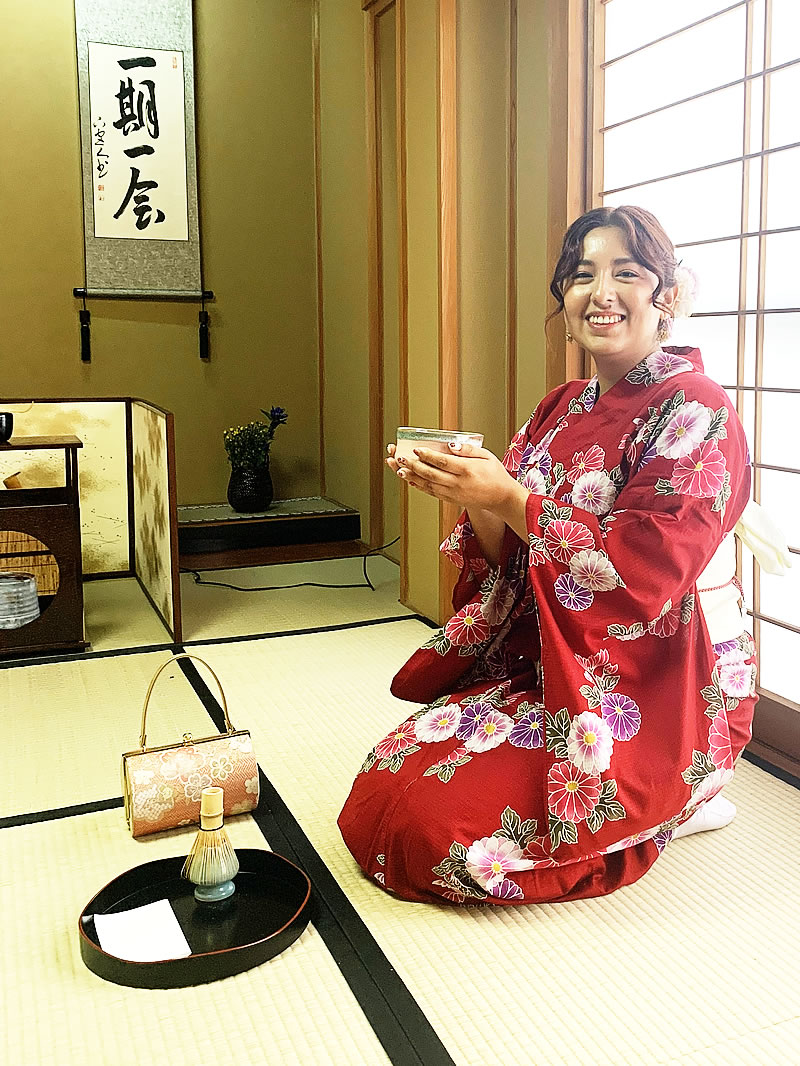
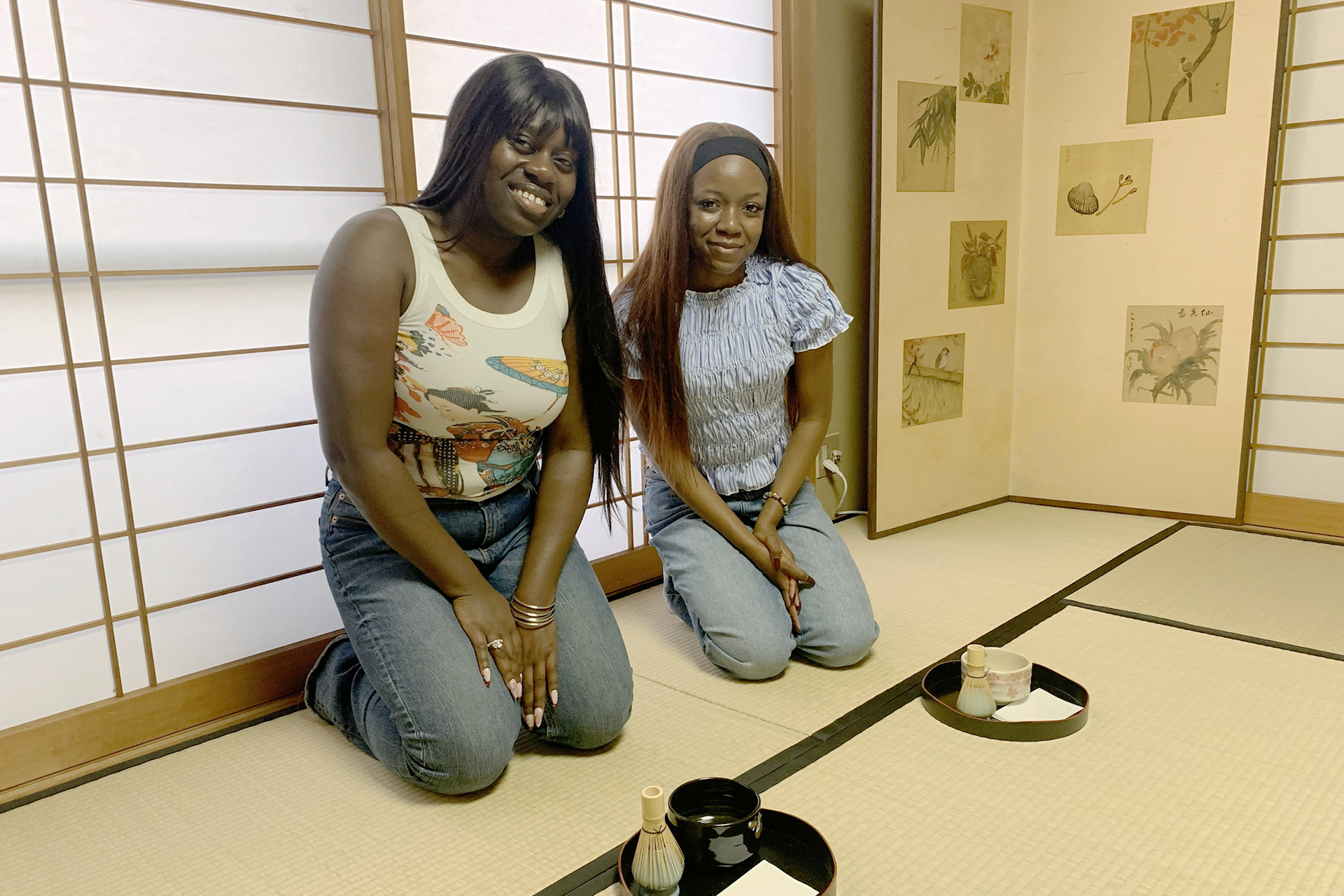
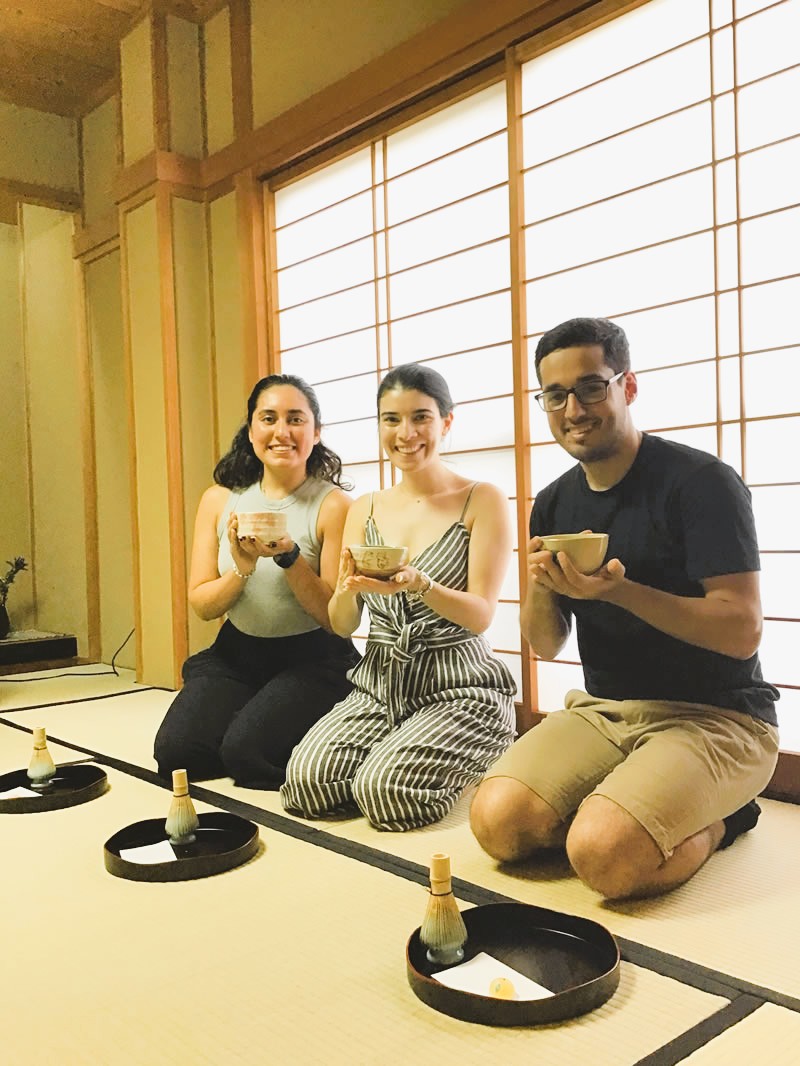
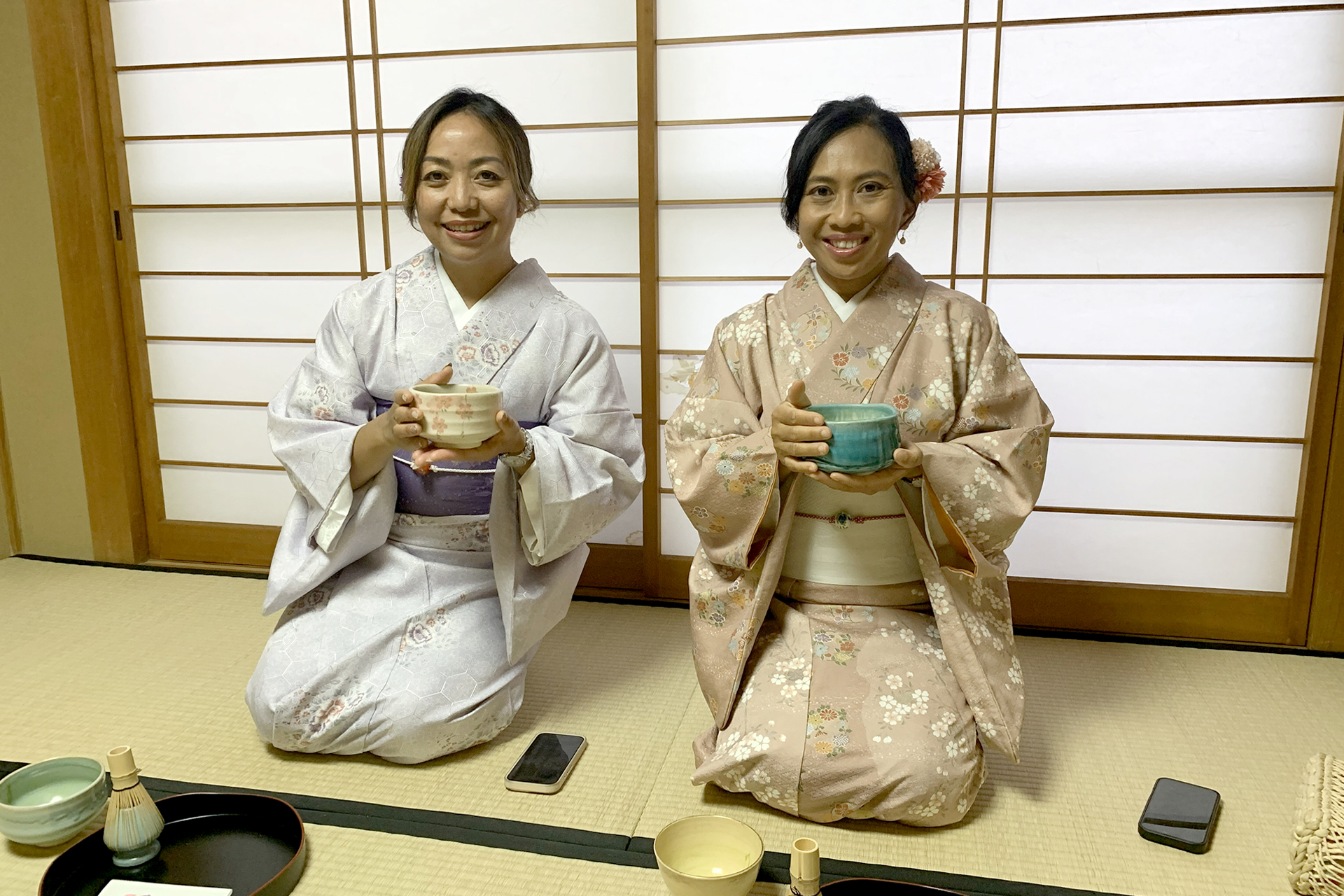
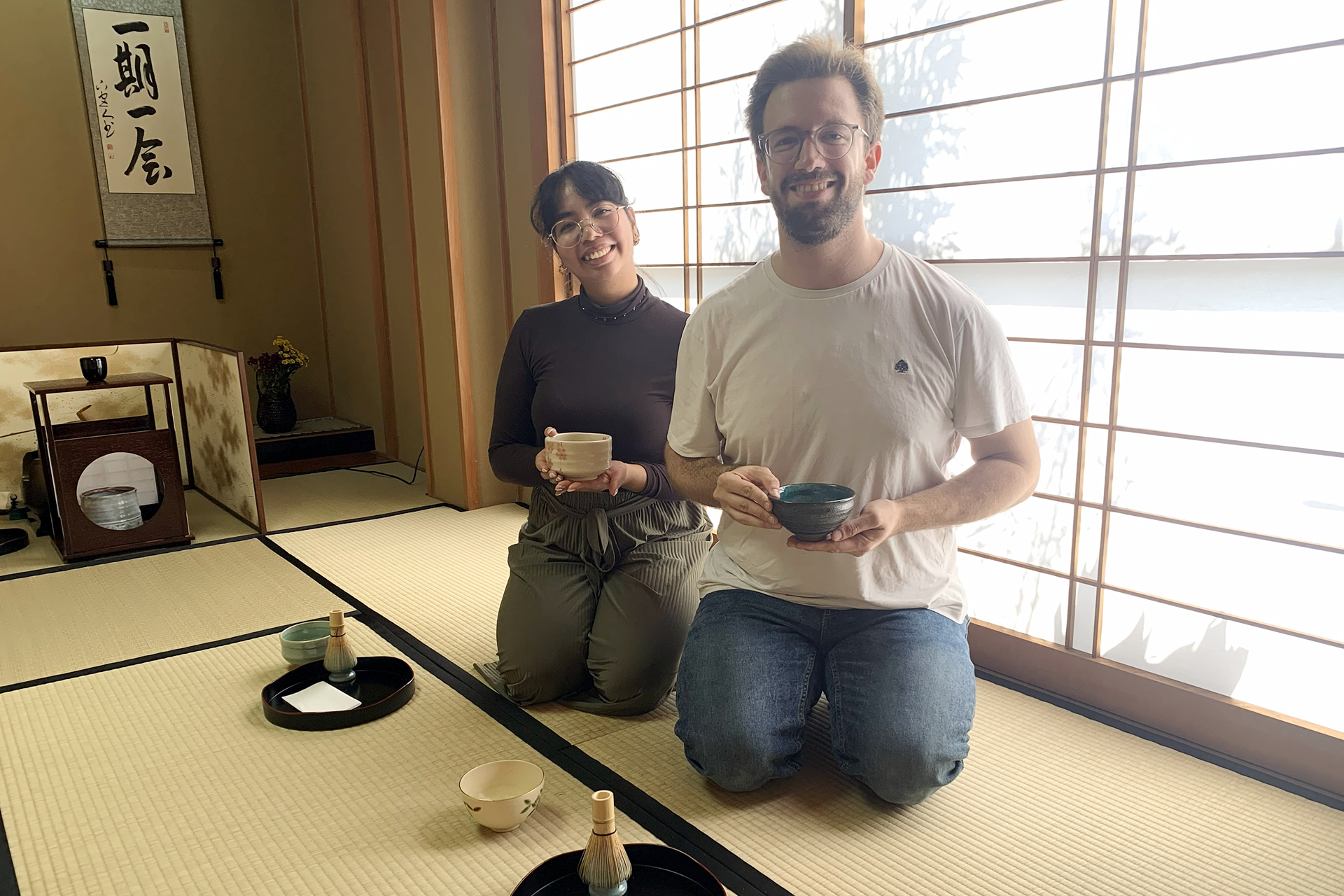
Guests from Around the World at Tea Ceremony Canon Kyoto
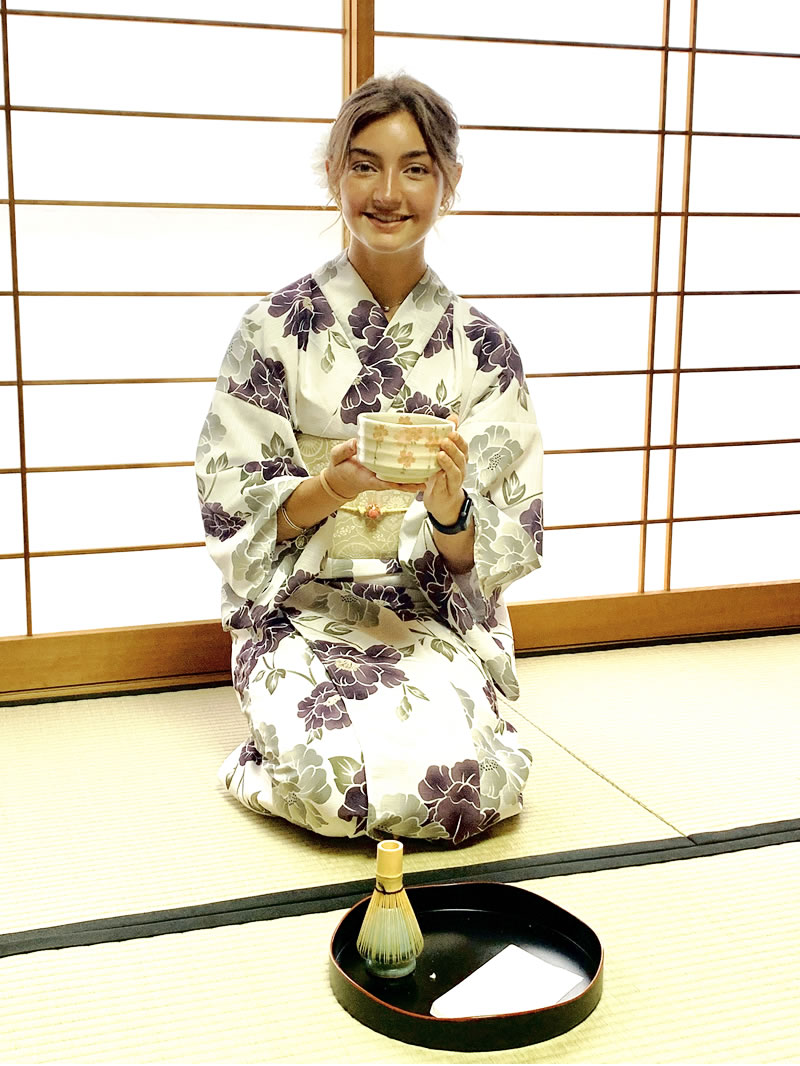
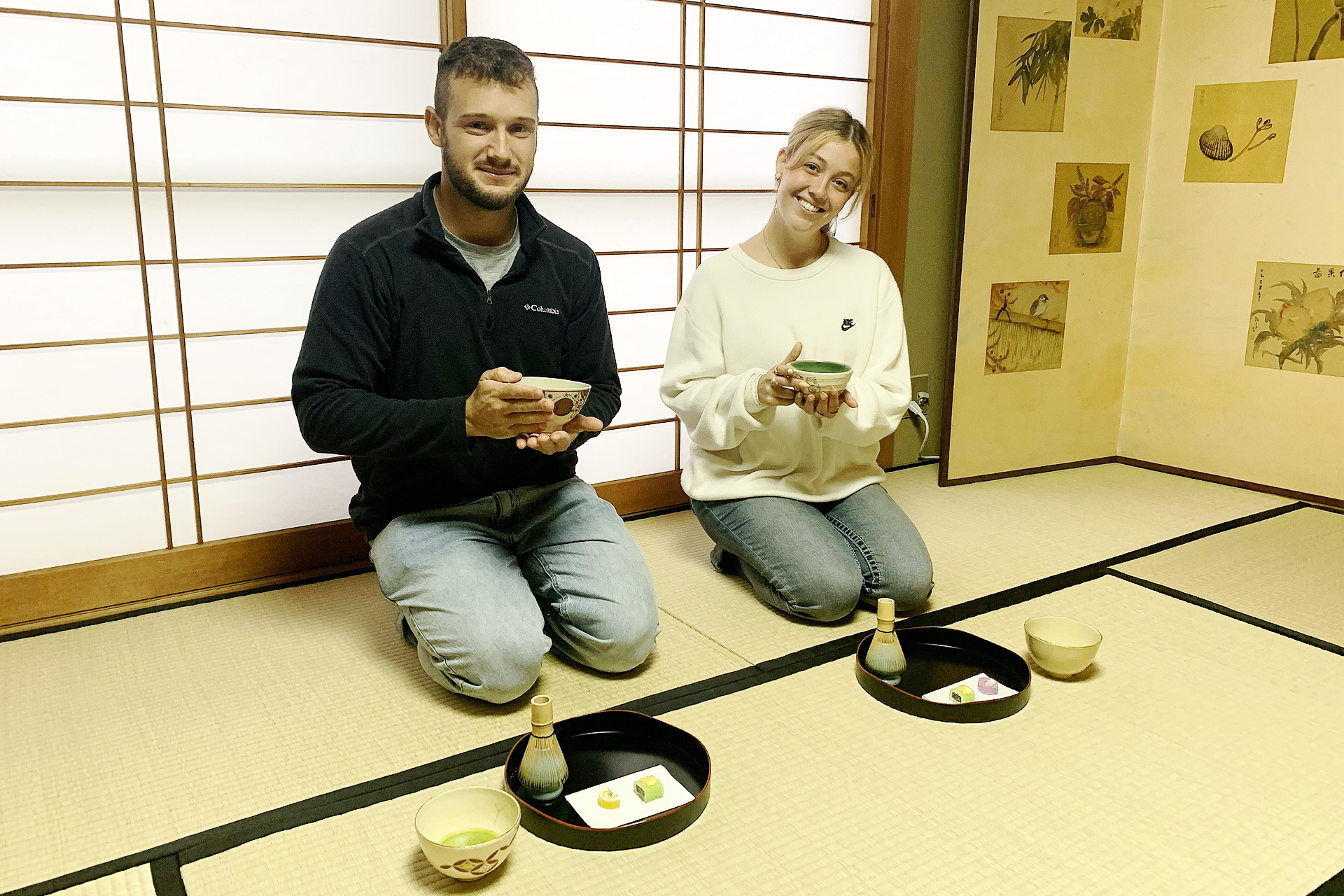
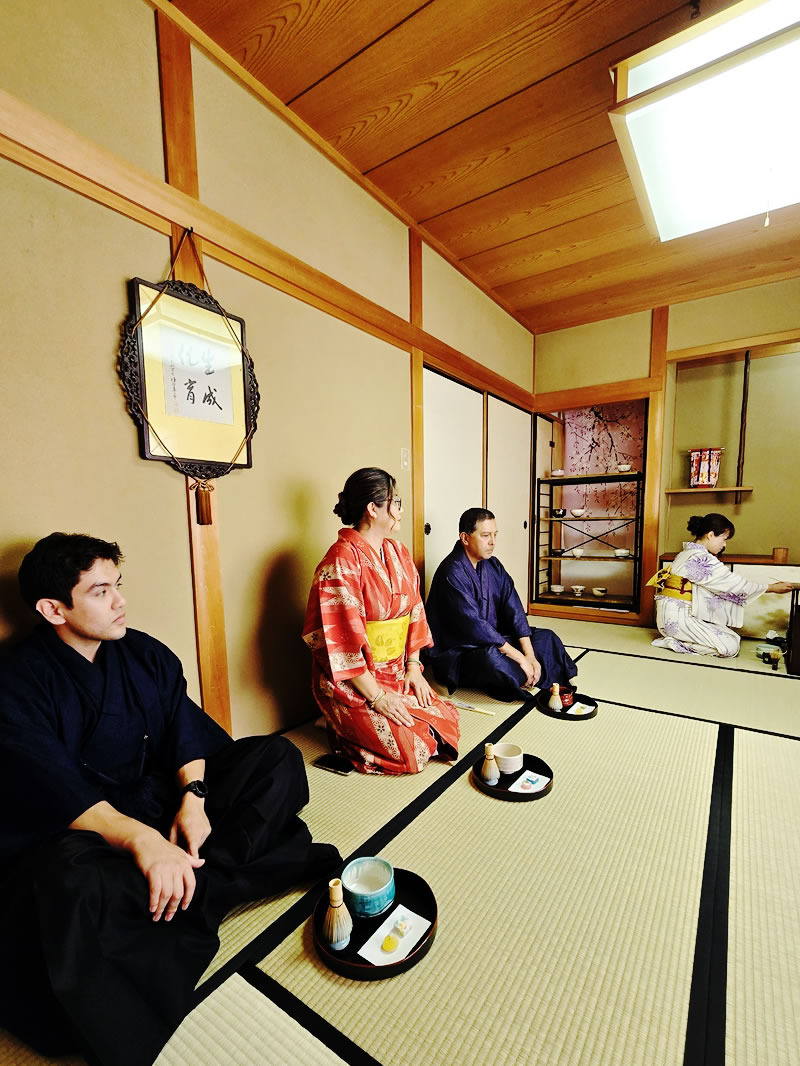
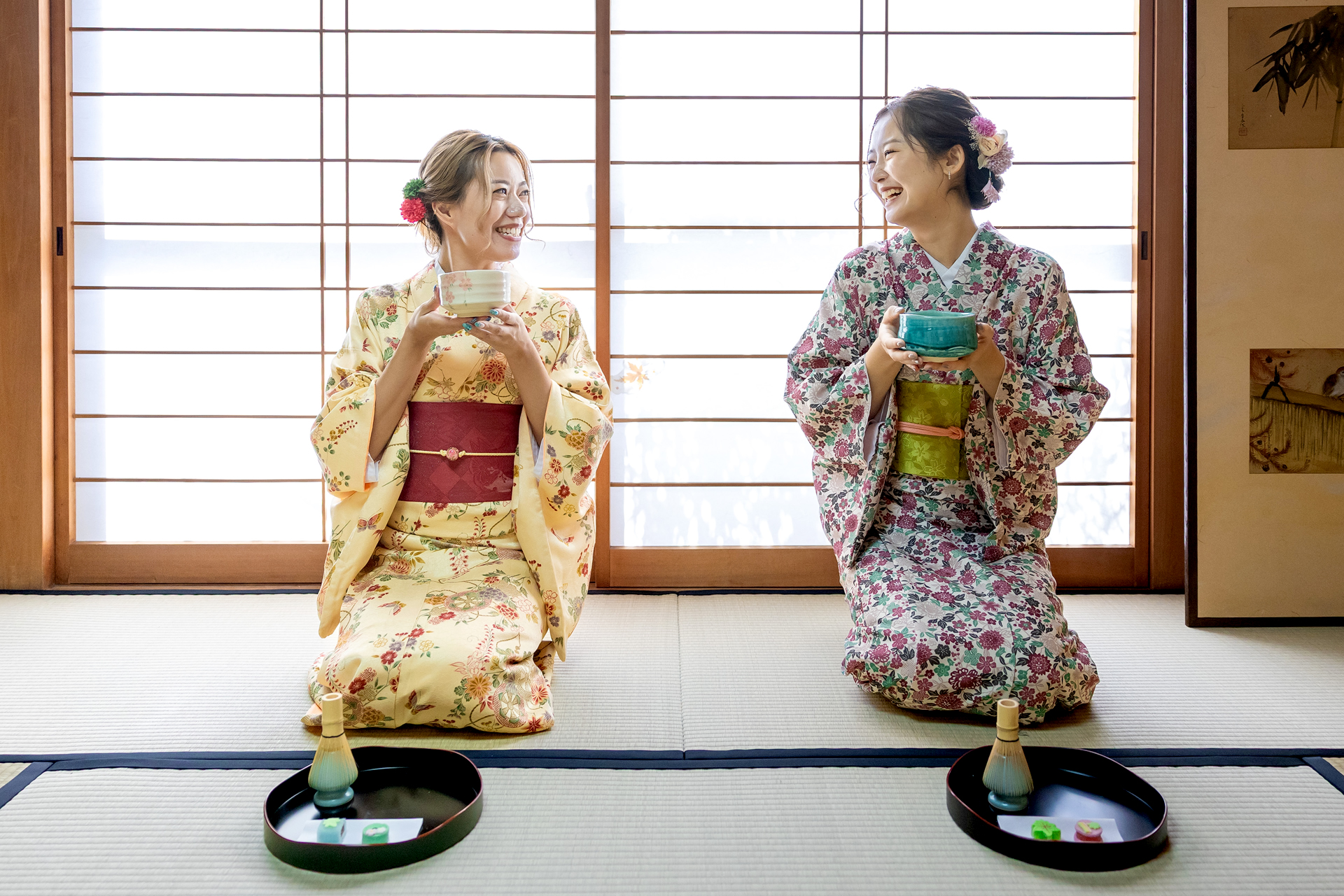
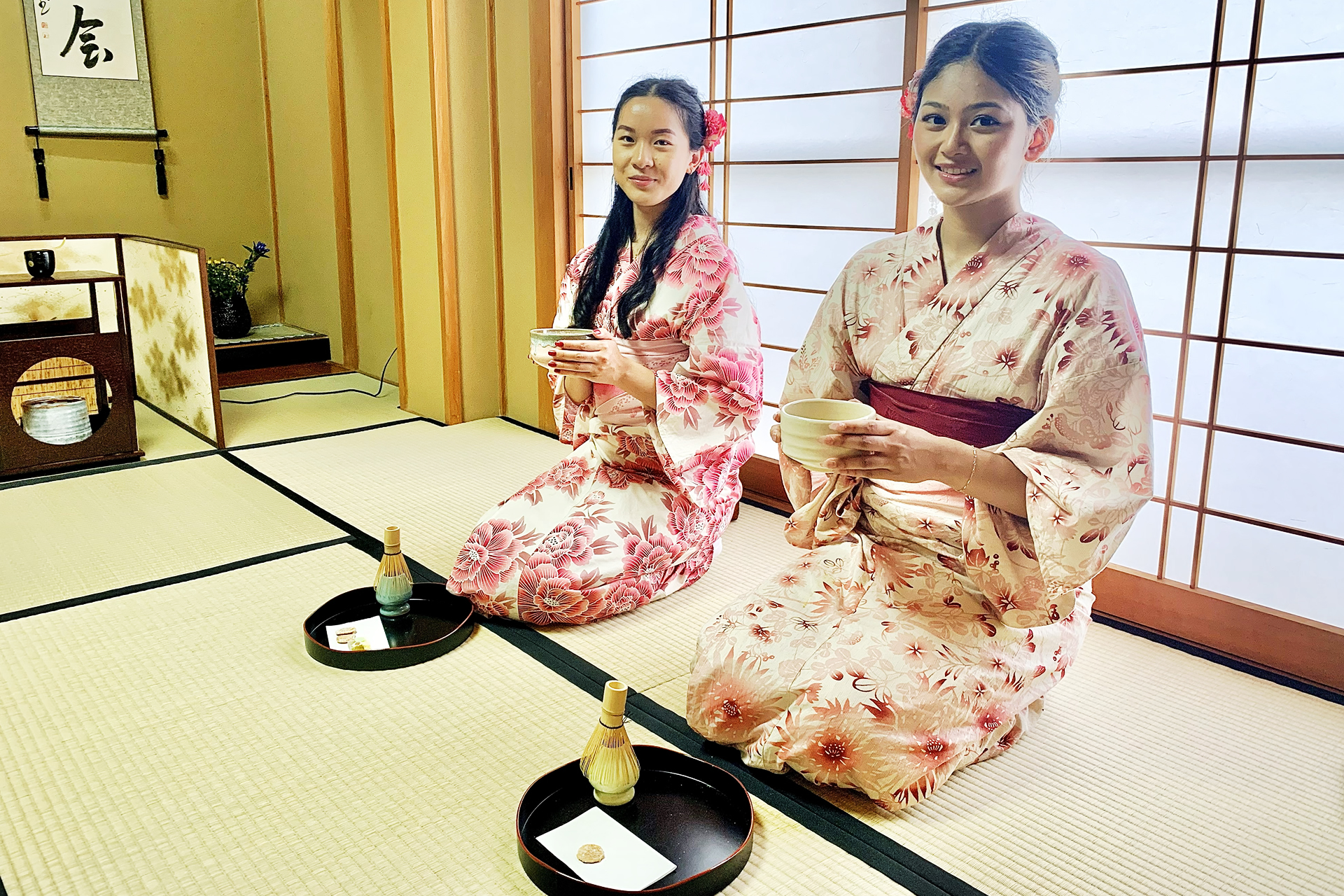
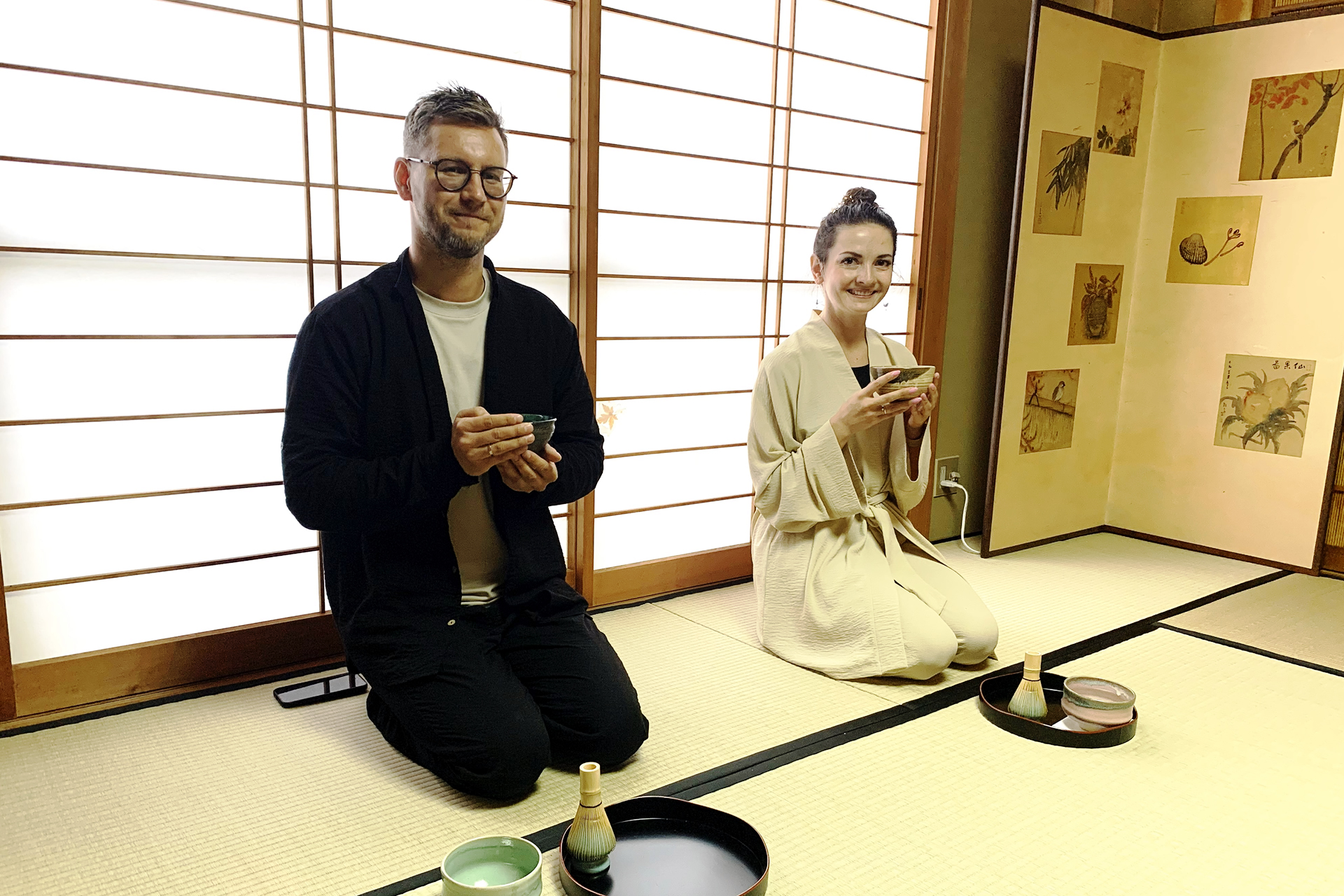
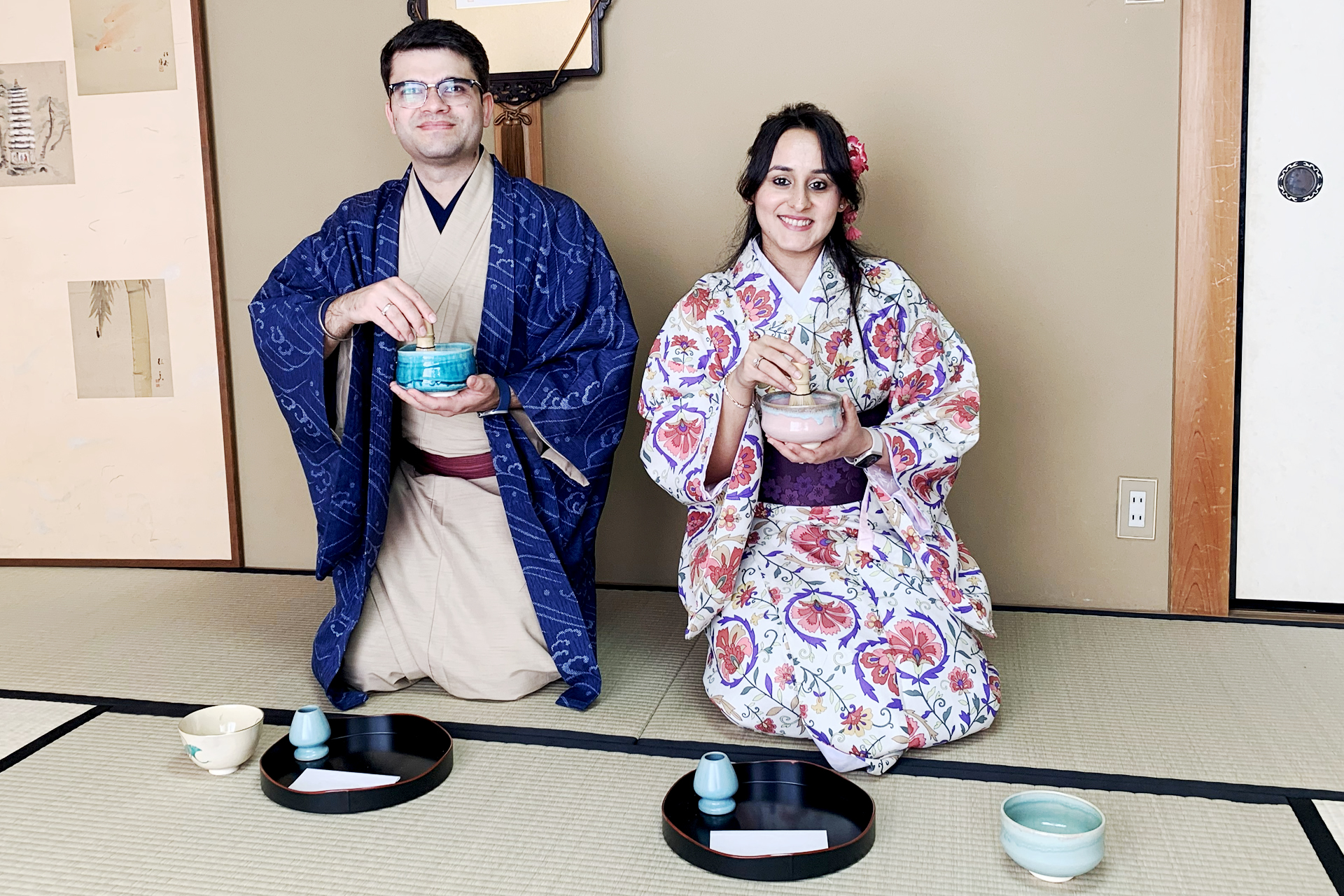
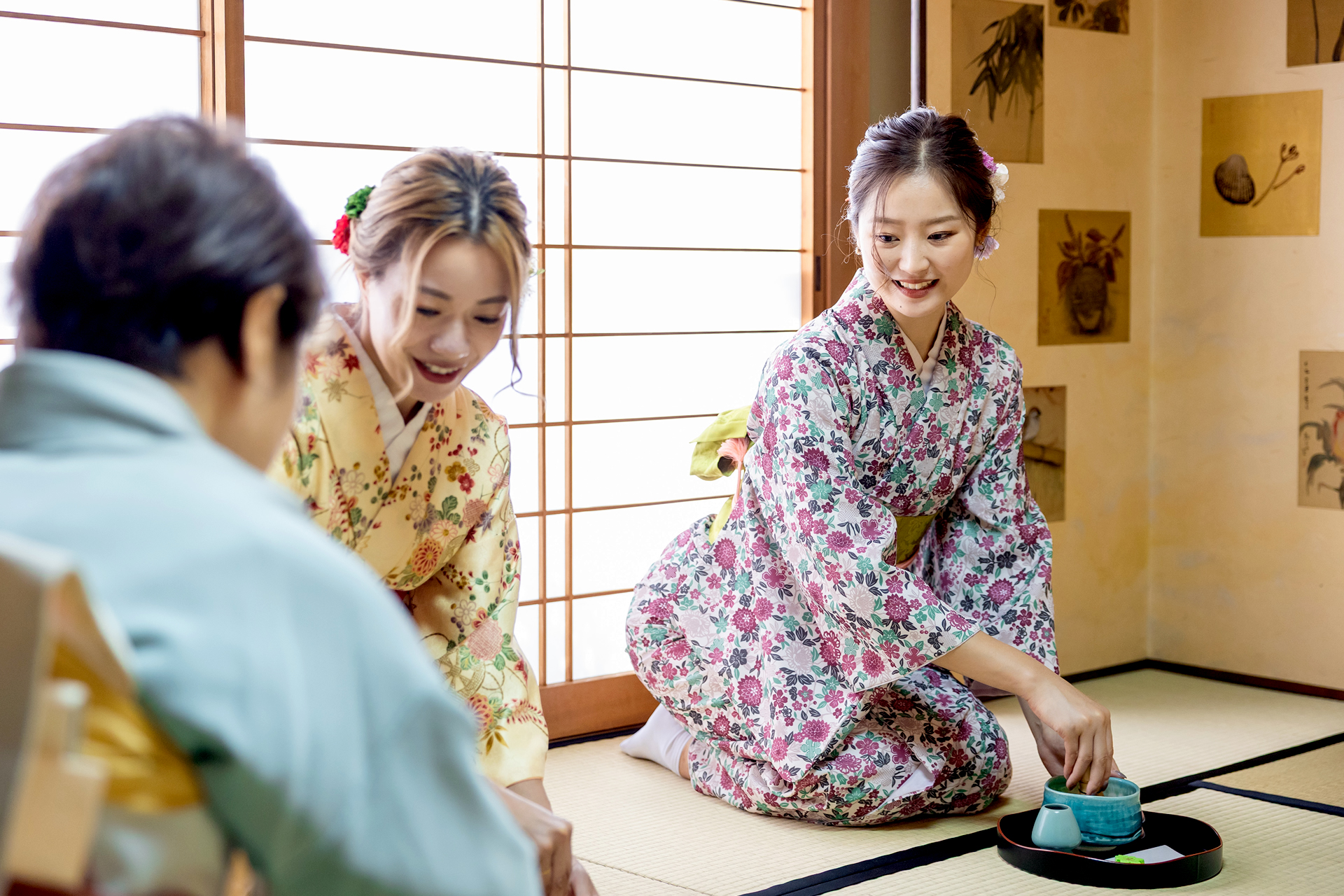
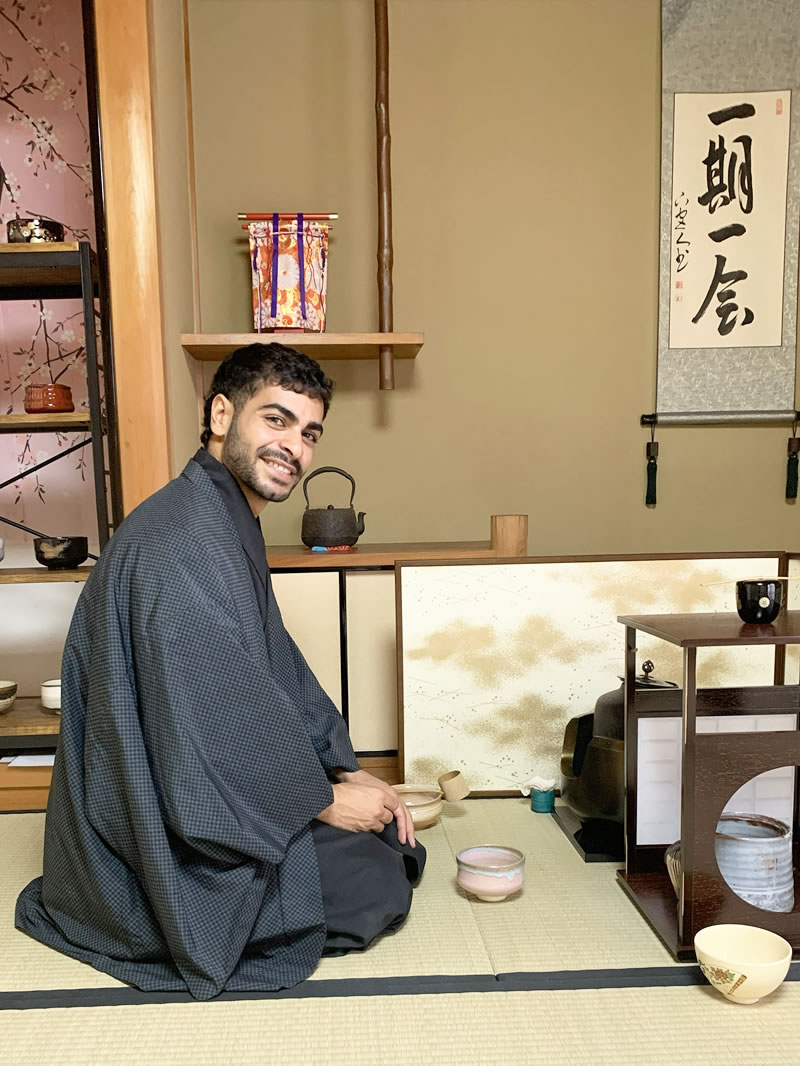
Just one minute from Fushimi Inari’s iconic gates, Canon Kyoto welcomes guests from around the globe into the serene world of traditional tea ceremony.