
Mastering the Art of Whisking Matcha: Secrets to Perfect Froth
There’s something almost magical about watching a tea master whisk matcha. The bamboo whisk blurs into motion, the bright green powder transforms into a smooth, frothy liquid, and within moments, a perfect bowl of tea emerges. It looks effortless—until you try it yourself and end up with lumps, flat tea, or a bitter, gritty mess.
But here’s the good news: with the right technique and a bit of practice, you can create that same beautiful, frothy matcha at home or during your travels in Japan. Let me share the secrets that will transform your whisking from frustrating to meditative.
Understanding Your Matcha: Quality Matters
Before we even talk about whisking, let’s address the foundation: your matcha powder itself.
The quality spectrum:
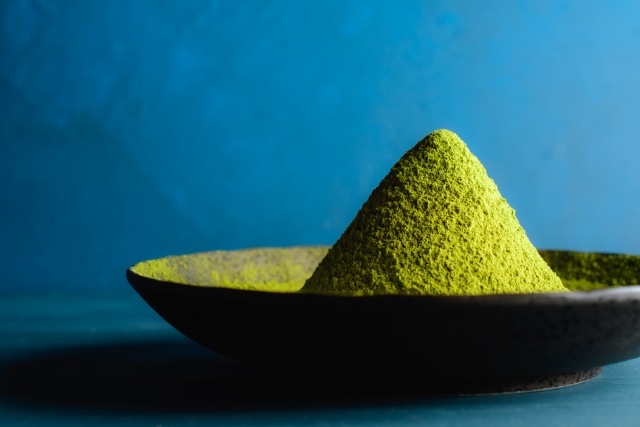
Ceremonial grade matcha is the highest quality—vibrant green, finely ground, with a naturally sweet, umami flavor. This is what’s used in traditional tea ceremonies and what you should seek out for the best whisking experience.
Culinary grade matcha is more affordable but can be bitter and harder to whisk smoothly. It’s better suited for lattes and baking.
When you’re in Japan, you’ll find exceptional matcha in Kyoto’s tea shops, particularly in the Uji area, famous for producing some of the world’s finest tea. Look for powder that’s bright, almost luminescent green—dull, yellowish matcha is old or low quality.
Storage tip: Matcha oxidizes quickly. Keep it in an airtight container in the refrigerator and use within a few months of opening.
The Essential Tools
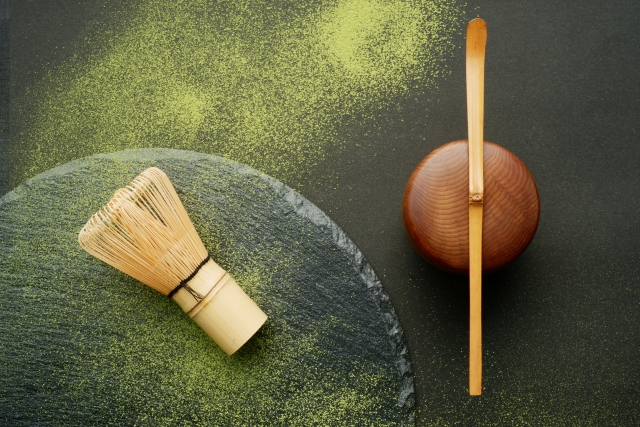
Traditional matcha preparation uses specific implements, each designed for its purpose:
Chasen (bamboo whisk): Usually carved from a single piece of bamboo with 80-120 fine tines. This is what creates that signature froth.
Chawan (tea bowl): Wide enough to whisk comfortably, with a shape that helps create the proper motion.
Chashaku (bamboo scoop): The traditional measure for matcha powder.
Chakin (linen cloth): For wiping the bowl.
Modern alternative: If you don’t have these tools yet, you can practice with a small bowl and a small whisk or even a milk frother, though the texture won’t be quite the same.
Preparing Your Workspace: The Foundation of Success
Before you start whisking, proper preparation makes all the difference:
1. Sift your matcha: This crucial step breaks up clumps before they hit the water. Use a fine-mesh strainer and gently push the powder through with a spoon. Yes, it’s an extra step, but it virtually guarantees smooth tea.
2. Warm your bowl: Pour hot water into your chawan, swish it around, then discard. This warms the bowl and prevents your matcha from cooling too quickly.
3. Prepare your whisk: Soak your chasen in warm water for a minute to soften the bamboo tines and prevent breakage. Gently flex the tines to ensure they’re pliable.
4. Get your water temperature right:
- For thin tea (usucha): 70-80°C (160-175°F)
- For thick tea (koicha): 60-70°C (140-160°F)
Water that’s too hot destroys the delicate flavors and can make matcha bitter. If you don’t have a thermometer, let boiled water cool for about 5 minutes.
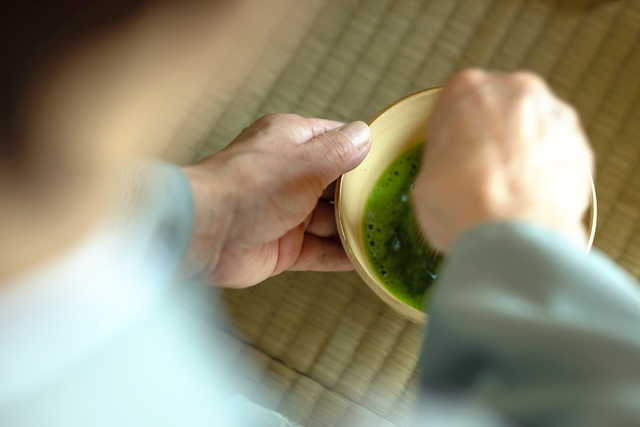
Now for the main event. The whisking technique is surprisingly specific, and each detail contributes to the final result.
Now for the main event. The whisking technique is surprisingly specific, and each detail contributes to the final result.
Step-by-step whisking:
1. Add the matcha: Using a chashaku, add about 2 scoops (roughly 2 grams or 1/2 teaspoon) of sifted matcha to your warmed, dried bowl.
2. Add water: Pour about 70ml (2-3 oz) of hot water over the powder. Some tea masters add just a tiny bit first, making a paste to ensure all powder is wetted before adding the rest of the water.
3. Begin whisking:
- Hold the whisk vertically, not at an angle
- Keep the whisk near the bottom of the bowl (don’t lift it high)
- Your grip should be relaxed but firm—imagine holding a bird: secure but gentle
4. The motion—this is key:
- Move the whisk rapidly in an “M” or “W” pattern (not circular!)
- Think of it as drawing the letter repeatedly
- Your wrist does most of the work, not your whole arm
- Speed matters: aim for quick, controlled movements
- Continue for 15-20 seconds
5. Creating the froth:
- As foam begins to form, you can slow down slightly
- Make smaller, faster movements near the surface
- In the final few seconds, create a circular motion to gather any large bubbles
- Lift the whisk straight up through the center, leaving a peak of foam
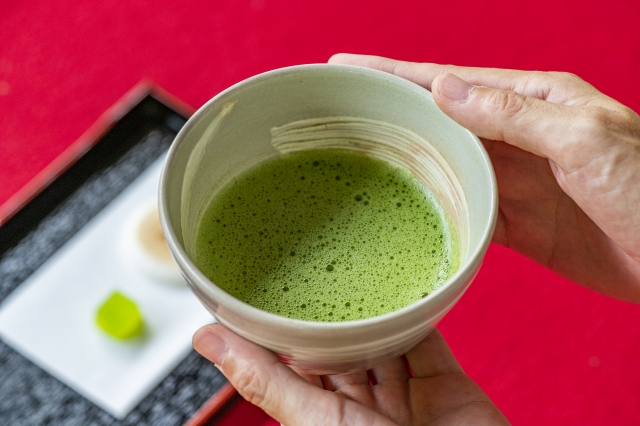
6. The finish: The surface should be covered with fine, creamy foam that looks like clouds. Ideally, there should be few large bubbles—the texture should be smooth and uniform.
Understanding Usucha vs. Koicha
Tea ceremony traditionally includes two styles of matcha, each requiring different whisking approaches:
Usucha (thin tea):
- The style you’ll most commonly encounter
- Light, frothy, and slightly bitter-sweet
- Whisked vigorously as described above
- Uses about 2 grams of matcha per serving
Koicha (thick tea):
- Reserved for formal ceremonies
- Uses 4 grams of matcha with less water
- Consistency like melted chocolate—thick and smooth
- Not whisked but “kneaded” with the chasen using slow, deliberate movements
- No froth—the goal is smooth integration
Why the difference? Koicha uses such high-quality, expensive matcha that creating froth would waste the precious powder in the foam. The slow preparation also creates a more meditative, contemplative experience.
Troubleshooting Common Problems
Problem: Lumpy tea with clumps floating
- Solution: You didn’t sift your matcha. Always sift before whisking.
- Prevention: Store matcha properly to prevent it from clumping in the first place.
Problem: Flat tea with no foam
- Solution: Whisk faster with more vigorous motion. Make sure your whisk is making contact near the bottom of the bowl.
- Check: Is your whisk old or damaged? Broken tines can’t create proper foam.
Problem: Large, soapy bubbles instead of fine foam
- Solution: You’re whisking too slowly or with too much vertical motion. Keep the whisk near the bottom with rapid M/W movements.
- Fix: If you’ve already created large bubbles, gently stir them into smaller foam.
Problem: Bitter, unpleasant taste
- Solution: Water is too hot, or matcha quality is poor.
- Check: Make sure you’re using ceremonial-grade matcha and water below 80°C.
Problem: Gritty texture
- Solution: Whisk longer to fully incorporate the powder.
- Alternative: Your matcha might be too coarse. Higher quality matcha dissolves more easily.
The Sounds of Success
Here’s a secret many instructors don’t mention: listen to your whisking. There should be a distinct rhythmic sound as the whisk strikes the bottom and sides of the bowl. This sound—a soft, rapid “taka-taka-taka”—indicates you’re using the right speed and pressure.
If you hear nothing, you’re too gentle. If it’s loud or harsh, you’re too aggressive. Find that middle ground where the sound is consistent and pleasant.
Practicing Matcha Preparation at Tea Ceremony Canon Kyoto
While you can certainly practice whisking matcha at home, there’s something invaluable about learning hands-on from an experienced instructor—especially one who understands the challenges foreign visitors face.
Tea Ceremony Canon Kyoto offers matcha whisking workshops where you’ll do more than just watch a demonstration. You’ll actually hold the chasen, feel the proper motion, and whisk your own bowl of matcha under gentle guidance. The instructors speak English and are skilled at explaining the subtle techniques that make the difference between mediocre and excellent matcha.
What’s particularly valuable is the immediate feedback. When you’re whisking, your instructor can watch your wrist movement, correct your grip, or adjust your speed in real-time. They’ll explain why the “M” pattern works better than circular stirring (it creates more turbulence without breaking the fragile tines) and how to recognize when your foam has reached the ideal consistency.
Located just steps from Fushimi Inari Shrine, you can combine your lesson with purchasing high-quality Kyoto matcha from nearby tea shops. The instructors can recommend specific vendors and grades of matcha suitable for taking home—and since you’ll have just learned proper preparation, you’ll know exactly how to use it.
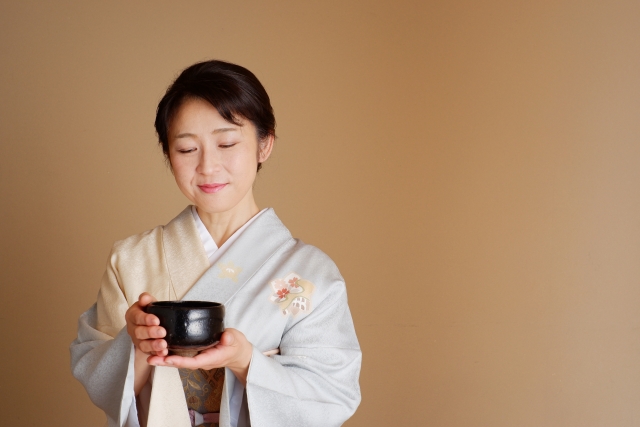
Plus, with kimono rental available on-site, you can experience the full aesthetic of tea preparation. There’s something about wearing traditional clothing that naturally slows your movements and brings grace to the whisking motion.
Taking Your Skills Home
Once you’ve mastered the technique, matcha preparation becomes a beautiful daily ritual. Here’s how to maintain your practice:
Morning ritual: Start your day with a bowl of matcha. The focused preparation serves as a form of moving meditation.
Investment in tools: A quality chasen costs $20-40 and will last years with proper care. After each use, rinse with water (no soap!) and place it on a whisk holder (kusenaoshi) to maintain its shape.
Matcha shopping in Japan: When visiting Kyoto, seek out shops like Ippodo Tea or Fukujuen in the Uji area. Ask to try samples—good shops are happy to let you taste before buying.
Proper storage: Keep your matcha in the refrigerator in an airtight container. Bring it to room temperature before opening to prevent condensation.
Beyond Technique: The Meditative Aspect
As you practice, you’ll notice that whisking matcha becomes less about achieving perfect foam and more about the experience itself. The repetitive motion is calming. The focused attention required pulls you into the present moment. The sound of the whisk, the smell of the tea, the transformation from powder to liquid—all of it creates a mindful pause in your day.
This is why tea ceremony masters spend years perfecting something as simple as whisking tea. It’s not really about the tea—it’s about training your mind to be fully present, to find meditation in small, precise actions, to appreciate the beauty in everyday tasks.
Your Matcha Journey Begins
Start simple: get good matcha, sift it, use the right temperature water, and practice the M/W whisking motion. Don’t worry if your first attempts aren’t Instagram-perfect. Even tea masters will tell you that each bowl of tea is unique—some days the foam is perfect, other days it’s not, and that’s okay.
What matters is the attention you bring to the preparation, the care you take with each step, and the peace you find in those moments of focused whisking.
The whisk is waiting. The matcha is ready. Your perfect froth awaits—one practice session at a time.
Canon Kyoto Tea Ceremony Booking
Please Select Your Booking Option:
🇺🇸 English Booking Form
If you’re comfortable proceeding in English,
you can complete your reservation using the booking form below.
🌐 Multilingual Booking Page
If you’d prefer to view the booking page in your native language,
please click here to access our Multilingual Booking Form.


